English
 Español
 tiếng việt
 русский
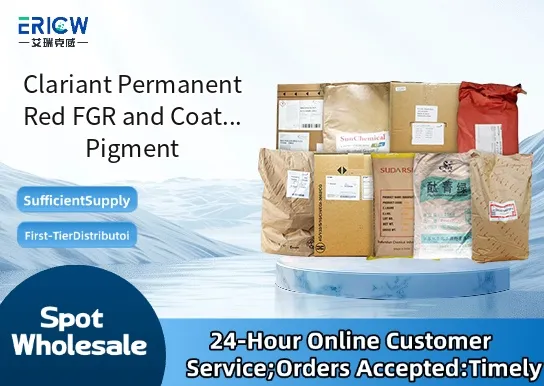
High chroma and excellent color strength for vibrant, consistent red shades.
Outstanding thermal stability suitable for high-temperature processing up to 280 °C.
Good lightfastness and weather resistance in demanding outdoor applications.
Low migration behavior, ensuring color integrity in polymer matrices and coated systems.
Optimized dispersibility in both polar and non-polar media, enabling efficient incorporation.
Automotive coatings (basecoat and clearcoat systems).
Industrial coil and can coatings requiring durability and gloss retention.
Engineering plastics including polyolefins, ABS, and polycarbonate.
High-performance inks for packaging and decorative laminates.
Powder coatings for architectural and appliance finishes.
| Chemical Type | Quinacridone-based organic pigment |
| Product Form | Free-flowing powder |
| Appearance | Brilliant red powder with bluish undertone |
| Primary Applications | Coatings, engineering plastics, powder coatings, inks |
| Key Features | Thermal stability, low migration, high tinctorial strength |
| Benefits | Color consistency, process robustness, regulatory compliance (REACH, RoHS) |
| Recommended Dispersants | Polymeric dispersants or acidic surfactants |
| Storage Conditions | Keep in cool, dry place; protect from moisture and direct sunlight |
Q1: What are the primary application areas for Permanent Red FGR and Coat... Pigment?
A: This pigment is specifically developed for demanding coating and ink systems requiring high chroma, excellent lightfastness, and thermal stability — including industrial coatings, coil coatings, automotive refinishes, and high-performance printing inks.
Q2: Is this pigment suitable for food-contact coatings?
A: Permanent Red FGR and Coat... Pigment is not intended for direct food-contact applications unless explicitly approved under applicable regional regulatory frameworks. Formulators must conduct full compliance assessments based on final use conditions and regulatory requirements.
Q3: How does this pigment perform in high-temperature curing processes?
A: It exhibits good thermal stability and retains color integrity during typical baking cycles used in coil and automotive coating applications, supporting cure temperatures up to approximately 200 °C for standard durations.
Q4: What dispersion characteristics can be expected in solvent-based versus water-based systems?
A: The pigment demonstrates good dispersibility in both solvent-based and water-based media when processed with appropriate wetting and dispersing agents. Optimal dispersion typically requires high-shear mixing or bead milling, with performance varying according to resin compatibility and formulation pH.
Contact With Us:
E-mail: wangxingqiang@ericwchem.com
Have a Questions? Call Us:
Add:
Building A1, Jiete Industrial Park, Huangpu District, Guangzhou City, Guangdong Province, China