English
 Español
 tiếng việt
 русский
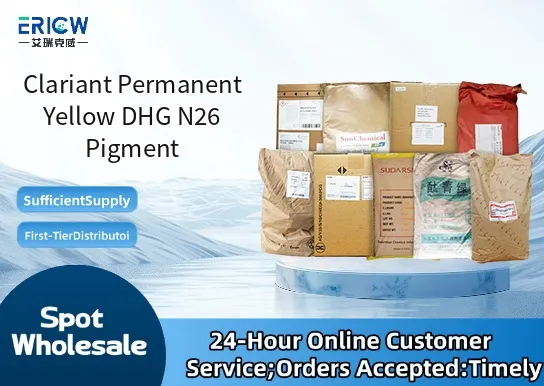
High chroma and excellent brightness for vibrant, clean yellow shades.
Outstanding thermal stability—suitable for high-temperature processing up to 280 °C.
Good lightfastness and weather resistance in demanding outdoor applications.
Excellent dispersibility in both polar and non-polar polymer systems.
Low migration behavior, ensuring color integrity in food-contact-compliant compounds (subject to local regulatory approval).
Polyolefin masterbatches (PP, PE) for packaging and automotive components.
Engineering plastics including ABS, PS, and PC for consumer electronics housings.
Flexible and rigid PVC applications such as flooring, cables, and profiles.
Coatings for industrial and architectural use requiring durable yellow coloration.
Inks for packaging gravure and flexographic printing where color consistency is critical.
| Chemical Type | Azo pigment (Benzimidazolone derivative) |
| Product Form | Free-flowing powder |
| Appearance | Bright greenish-yellow powder |
| Primary Applications | Polyolefins, engineering plastics, PVC, coatings, inks |
| Key Features | High thermal stability, low migration, good dispersibility |
| Benefits | Consistent batch-to-batch color, reduced filter clogging, efficient pigment utilization |
| Regulatory Compliance | REACH registered; compliant with EU Directive 2002/72/EC for plastic food contact (when used within specified limits) |
| Recommended Processing Temperature Range | Up to 280 °C (short-term) |
Q1: What is the primary chemical class of Clariant Permanent Yellow DHG N26?
A: Clariant Permanent Yellow DHG N26 is a high-performance monoazo pigment, specifically engineered for excellent lightfastness, heat stability, and dispersion behavior in demanding polymer systems.
Q2: Is this pigment suitable for food-contact plastics?
A: While DHG N26 is widely used in non-food-contact plastic applications such as automotive parts and industrial packaging, its suitability for food-contact applications depends on final regulatory assessment by the formulator and must comply with applicable regional food-contact legislation — it is not pre-approved for all food-contact uses.
Q3: How does DHG N26 perform in polypropylene (PP) during high-temperature processing?
A: This pigment demonstrates good thermal stability in PP up to typical melt processing temperatures, maintaining color strength and minimizing degradation or blooming when properly dispersed and compounded.
Q4: What is the recommended method for incorporating DHG N26 into masterbatches?
A: For optimal performance, DHG N26 is typically incorporated via twin-screw extrusion using appropriate screw configuration and temperature profile; pre-wetting or use of carrier resin compatible with the target polymer improves dispersion efficiency and batch consistency.
Q5: Does DHG N26 offer resistance to common solvents used in ink formulations?
A: Yes, DHG N26 exhibits good solvent resistance in standard offset, gravure, and flexographic ink systems, retaining color integrity and showing minimal bleeding or migration under typical drying and curing conditions.
Contact With Us:
E-mail: wangxingqiang@ericwchem.com
Have a Questions? Call Us:
Add:
Building A1, Jiete Industrial Park, Huangpu District, Guangzhou City, Guangdong Province, China