English
 Español
 tiếng việt
 русский
High chroma and excellent lightfastness for durable color performance.
Outstanding thermal stability suitable for high-temperature processing up to 280 °C.
Good dispersibility in both polar and non-polar polymer matrices.
Low volatility and minimal extractables—compliant with stringent food-contact and toy safety requirements.
Reproducible batch-to-batch color consistency supported by Clariant’s rigorous quality control.
Polyolefin masterbatches (PP, PE) for packaging and automotive components.
Engineering plastics including ABS, PS, and PC for consumer electronics housings.
Food-grade plastic containers and caps requiring regulatory compliance (EU No. 10/2011, FDA 21 CFR).
Toy manufacturing meeting EN71-3 and ASTM F963 heavy metal limits.
Technical fibers and monofilaments for industrial filtration and textile applications.
| Chemical Type | Polycyclic aromatic pigment (copper phthalocyanine derivative) |
| Product Form | Free-flowing powder |
| Appearance | Dark blue to violet-blue fine powder |
| Primary Applications | Polyolefins, engineering thermoplastics, fibers |
| Key Features | High thermal stability, low migration, excellent dispersion |
| Benefits | Color consistency, regulatory compliance, processing robustness |
| Regulatory Status | Compliant with EU REACH, RoHS, and FDA 21 CFR §178.3297 |
| Recommended Carrier | Polyethylene or polypropylene wax-based carriers |
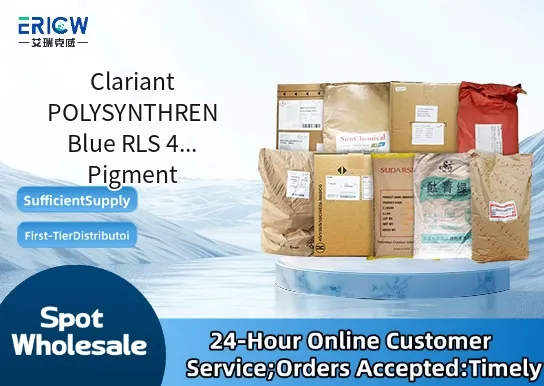
Q1: What is the primary chemical nature of POLYSYNTHREN Blue RLS 4... Pigment?
A: POLYSYNTHREN Blue RLS 4... is an organic pigment based on a copper phthalocyanine derivative, engineered for high chromatic strength, excellent lightfastness, and thermal stability in demanding polymer processing environments.
Q2: In which polymer systems is this pigment typically used?
A: It is widely applied in polyolefins (e.g., PP, PE), engineering thermoplastics (e.g., PA, PBT), and PVC compounds—particularly where high dispersion stability, low bleed resistance, and consistent color development during extrusion or injection molding are required.
Q3: How should POLYSYNTHREN Blue RLS 4... be incorporated into polymer formulations?
A: For optimal performance, it is recommended to pre-disperse the pigment using high-shear compounding or masterbatch techniques. Direct addition as a dry powder may be suitable in some high-intensity mixing systems, but compatibility with carrier resins and processing conditions should be verified.
Q4: Does this pigment offer regulatory compliance for food-contact applications?
A: POLYSYNTHREN Blue RLS 4... is designed to meet relevant global food-contact requirements where permitted by local regulations. However, final compliance depends on the complete formulation, processing parameters, and end-use conditions—validation testing per applicable jurisdiction is strongly advised.
Q5: What is the typical dosage range for achieving full shade development?
A: Dosage generally ranges from 0.1% to 2% by weight depending on the polymer matrix, desired opacity or transparency, and processing method—lower concentrations are often sufficient due to its high tinting strength and efficient dispersion characteristics.
Contact With Us:
E-mail: wangxingqiang@ericwchem.com
Have a Questions? Call Us:
Add:
Building A1, Jiete Industrial Park, Huangpu District, Guangzhou City, Guangdong Province, China