English
 Español
 tiếng việt
 русский
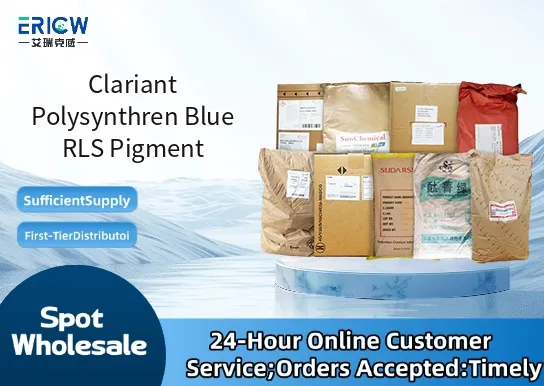
High chromatic strength and excellent lightfastness for long-term color stability.
Outstanding thermal stability suitable for high-temperature processing up to 280 °C.
Good dispersibility in common polymer matrices including polyolefins and engineering plastics.
Low migration behavior, ensuring color integrity in demanding end-use applications.
Compliant with major global regulatory frameworks including EU REACH and FDA 21 CFR §178.3290 for indirect food contact.
Polypropylene (PP) and polyethylene (PE) injection-molded consumer goods.
Automotive interior components requiring durable, non-blooming blue hues.
Household appliances with exposed plastic housings subject to UV exposure.
Industrial packaging films requiring consistent batch-to-batch color reproduction.
Technical fibers and monofilaments for outdoor textiles and geotextiles.
| Chemical Type | Polycyclic aromatic pigment (C.I. Pigment Blue 15:3 derivative) |
| Product Form | Free-flowing granular concentrate |
| Appearance | Deep reddish-blue granules |
| Primary Applications | Polyolefins, ABS, PS, and engineering thermoplastics |
| Key Features | High heat stability, low volatility, excellent dispersion |
| Benefits | Reduced plate-out, minimal filter pressure build-up, consistent coloration |
| Recommended Carrier | Polypropylene or ethylene-propylene copolymer |
| Storage Conditions | Store in dry, cool, well-ventilated area below 30 °C; protect from moisture |
Q1: What is the primary chemical nature of Polysynthren Blue RLS?
A: Polysynthren Blue RLS is a high-performance, polymeric anthraquinone-based pigment dispersion, specifically engineered for excellent lightfastness, thermal stability, and compatibility in demanding polymer systems.
Q2: Is this pigment suitable for food-contact plastics?
A: Polysynthren Blue RLS is designed for use in polymers intended for indirect food contact applications, subject to compliance with applicable regional regulations and final formulation assessment by the compounder or end-user.
Q3: How does Polysynthren Blue RLS perform under high-temperature processing conditions?
A: It exhibits robust thermal stability and retains its color integrity during typical melt processing of engineering thermoplastics, including injection molding and extrusion at temperatures up to approximately 300 °C.
Q4: What types of polymer matrices is it most commonly used in?
A: It is widely applied in polyolefins (PP, PE), engineering plastics (PA, PBT, PC), and thermoplastic elastomers, where high color strength, low migration tendency, and good dispersion stability are required.
Q5: How should Polysynthren Blue RLS be incorporated into polymer formulations?
A: It is supplied as a ready-to-use liquid dispersion and is typically added directly to the polymer matrix via masterbatch preparation or direct compounding; dosage depends on formulation requirements but generally ranges from 0.1% to 2% by weight for standard coloring applications.
Contact With Us:
E-mail: wangxingqiang@ericwchem.com
Have a Questions? Call Us:
Add:
Building A1, Jiete Industrial Park, Huangpu District, Guangzhou City, Guangdong Province, China