English
 Español
 tiếng việt
 русский
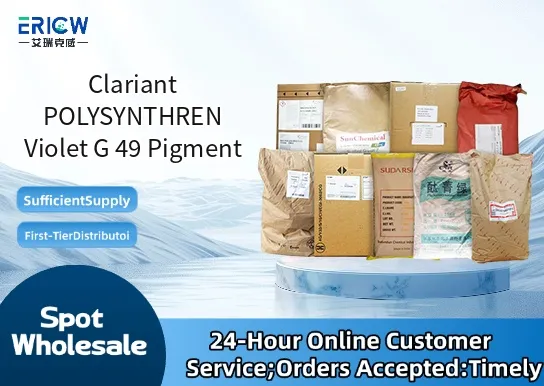
High chroma violet shade with excellent bluish undertone for vibrant, clean coloration.
Outstanding thermal stability suitable for high-temperature polymer processing up to 280 °C.
Excellent lightfastness and weather resistance (rated ISO 105-B02 ≥6) in demanding outdoor applications.
Good dispersibility in both polar and non-polar media, including polyolefins, PVC, and engineering thermoplastics.
Low migration tendency and high bleed resistance, ensuring color integrity in multi-layer and food-contact-compliant systems.
Polyolefin fibers and spunbond nonwovens for technical textiles and hygiene products.
Automotive interior plastics, including PP and TPO trim components requiring long-term UV durability.
Food packaging films and containers compliant with EU Directive 2011/10/EU and FDA 21 CFR §178.3297.
Architectural coatings and industrial maintenance paints requiring high gloss retention and fade resistance.
Engineering plastics such as ABS and PC for consumer electronics housings and medical device enclosures.
| Chemical Type | Quinacridone derivative (high-performance organic pigment) |
| Product Form | Free-flowing granular concentrate |
| Appearance | Violet powder with slight blue shade |
| Primary Applications | Polyolefins, PVC, engineering thermoplastics, coatings, inks |
| Key Features | Thermal stability, lightfastness, low migration, excellent dispersion |
| Regulatory Compliance | EU REACH registered; compliant with FDA 21 CFR §178.3297 and EU Plastics Regulation (EU) No 10/2011 |
| Particle Size (D50) | Approx. 0.08–0.12 µm (by laser diffraction) |
| Heat Resistance | Up to 280 °C (short-term exposure in polyolefins) |
Q1: What is the primary chemical class of POLYSYNTHREN Violet G 49?
A: POLYSYNTHREN Violet G 49 is a high-performance, solvent-stable anthraquinone-based organic pigment, engineered for excellent lightfastness and thermal stability in demanding polymer and coating applications.
Q2: Is this pigment suitable for use in polyolefin masterbatches?
A: Yes — POLYSYNTHREN Violet G 49 demonstrates good dispersibility and thermal stability in polyolefin systems, including PP and PE, and is commonly used in color concentrates processed at typical extrusion temperatures up to 260 °C.
Q3: How does POLYSYNTHREN Violet G 49 perform in automotive coatings requiring high weather resistance?
A: It offers very good UV stability and resistance to chalking, making it suitable for mid- to top-tier automotive refinish and plastic trim coatings where long-term color retention under outdoor exposure is critical.
Q4: What dispersion methods are recommended for optimal color development?
A: High-shear dispersion using standard industrial equipment — such as three-roll mills, bead mills, or high-speed dissolvers — is recommended. Pre-wetting with compatible solvents or resins helps achieve uniform distribution and maximizes tinting strength.
Q5: Can POLYSYNTHREN Violet G 49 be used in food-contact plastics?
A: This grade is not certified for direct food-contact applications. For regulatory-compliant uses, Clariant offers alternative pigments with specific food-contact approvals — please consult your Clariant technical representative for suitable alternatives aligned with regional requirements.
Contact With Us:
E-mail: wangxingqiang@ericwchem.com
Have a Questions? Call Us:
Add:
Building A1, Jiete Industrial Park, Huangpu District, Guangzhou City, Guangdong Province, China