English
 Español
 tiếng việt
 русский
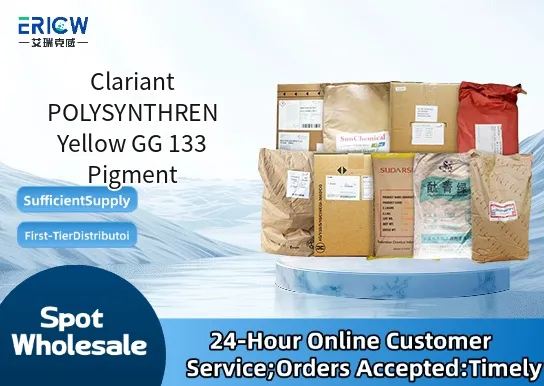
High chroma yellow shade with excellent lightfastness and weather resistance.
Outstanding thermal stability suitable for high-temperature processing up to 280 °C.
Good dispersibility in both polar and non-polar polymer matrices.
Low migration and bleed resistance in PVC, polyolefins, and engineering plastics.
Compliant with major global regulatory frameworks including EU REACH and FDA 21 CFR for indirect food contact applications.
Coloration of polypropylene (PP) and polyethylene (PE) for automotive interior parts.
Masterbatch formulation for rigid and flexible PVC profiles and sheets.
Pigmenting ABS and PS for consumer electronics housings and appliances.
Coloration of thermoplastic elastomers (TPE) used in sealing and grip components.
Specialty applications in synthetic fibers and industrial coatings requiring high durability.
| Chemical Type | Azo pigment – Disazo type |
| Product Form | Fine powder |
| Appearance | Bright yellow powder |
| Primary Applications | Polyolefins, PVC, ABS, PS, TPE |
| Key Features | High tinctorial strength, low volatility, excellent heat stability |
| Benefits | Consistent batch-to-batch color reproducibility and minimal filter clogging in extrusion |
| Recommended Processing Method | Masterbatch compounding or direct addition |
| Storage Conditions | Store in cool, dry place; protect from moisture and direct sunlight |
Q1: What is the primary chemical class of POLYSYNTHREN Yellow GG 133?
A: POLYSYNTHREN Yellow GG 133 is an organic pigment based on the monoazo chemical structure, specifically engineered for high chroma, clean yellow shade, and excellent thermal stability in polymer processing.
Q2: Is this pigment suitable for food-contact plastics?
A: POLYSYNTHREN Yellow GG 133 is not certified for direct food-contact applications under major global regulatory frameworks. It is intended for non-food-contact industrial and decorative plastic applications where regulatory compliance for migration is not required.
Q3: How does this pigment perform during high-temperature processing, such as injection molding of engineering thermoplastics?
A: It demonstrates good thermal stability up to approximately 280 °C for short residence times, making it suitable for polypropylene, ABS, PS, and certain grades of polyolefins—though extended exposure above 260 °C may lead to subtle shade shifts or reduced tinctorial strength.
Q4: What are typical dosage levels when dispersing in thermoplastic resins?
A: Dosage depends on the desired color intensity and base resin, but it is typically used at low concentrations—generally ranging from 0.1% to 2% by weight—with optimal dispersion achieved using standard compounding equipment and appropriate carrier resins.
Contact With Us:
E-mail: wangxingqiang@ericwchem.com
Have a Questions? Call Us:
Add:
Building A1, Jiete Industrial Park, Huangpu District, Guangzhou City, Guangdong Province, China