English
 Español
 tiếng việt
 русский
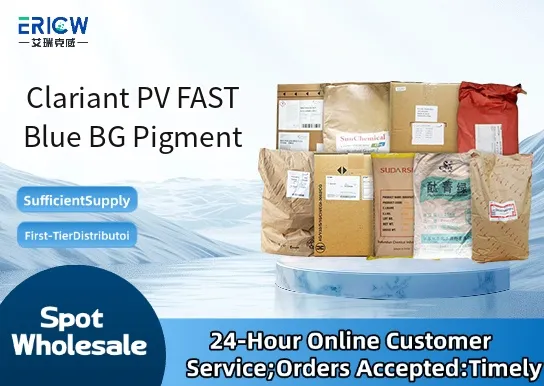
High chroma and excellent blue shade consistency for vibrant, reproducible coloration.
Outstanding thermal stability up to 280 °C, enabling safe use in high-temperature polymer processing.
Good lightfastness and weather resistance suitable for outdoor applications.
Excellent dispersibility in polyolefins, PVC, and engineering thermoplastics.
Low migration and bleed resistance in demanding plastic applications.
Polypropylene (PP) and polyethylene (PE) fibers and injection-molded parts.
PVC profiles, cables, and flexible sheeting.
Engineering plastics including ABS and polycarbonate blends.
Masterbatch formulations for automotive interior components.
Household appliances and consumer electronics housings.
| Chemical Type | Organic Pigment (Pigment Blue 15:3) |
| Product Form | Fine powder |
| Appearance | Blue-violet free-flowing powder |
| Primary Applications | Plastics, masterbatches, synthetic fibers |
| Key Features | Thermal stability, dispersion performance, color strength |
| Benefits | Consistent batch-to-batch color, low dust generation, compatibility with common plasticizers |
| Regulatory Compliance | EU REACH registered; compliant with FDA 21 CFR §178.3297 for food-contact plastics (subject to formulation and use conditions) |
| Storage Conditions | Store in cool, dry place; protect from moisture and direct sunlight |
Q1: What is the primary chemical class and pigment type of PV FAST Blue BG?
A: PV FAST Blue BG is a high-performance organic pigment based on a copper phthalocyanine derivative, classified under the Colour Index as Pigment Blue 15:3. It exhibits excellent crystalline stability and strong blue-shade hue with high tinting strength.
Q2: Is PV FAST Blue BG suitable for use in food-contact plastics?
A: PV FAST Blue BG is not approved for direct food-contact applications under major global regulatory frameworks. It is intended for general-purpose industrial plastics, coatings, and inks where regulatory compliance for food contact is not required.
Q3: How does PV FAST Blue BG perform in polyolefin processing, particularly during high-temperature extrusion?
A: This pigment demonstrates good thermal stability in polyolefin systems, maintaining color integrity and minimal blooming up to typical polypropylene and polyethylene processing temperatures. Its optimized particle size distribution supports dispersion stability and reduces plate-out risk during extended extrusion runs.
Q4: What are the recommended dispersion methods for achieving optimal color development in solvent-based coatings?
A: For solvent-based systems, high-shear dispersion using bead mills or three-roll mills is recommended. Pre-wetting with compatible solvents (e.g., aromatic hydrocarbons or ketones) followed by controlled milling ensures uniform particle deagglomeration and maximizes gloss and chroma performance.
Q5: Can PV FAST Blue BG be used alongside other high-strength organic pigments in multi-pigment formulations?
A: Yes — PV FAST Blue BG shows good compatibility with many common organic pigments (e.g., Pigment Red 170, Pigment Yellow 13, and Pigment Orange 34) in compounded masterbatches and liquid dispersions, provided formulation pH, polarity, and dispersant selection are balanced to avoid flocculation or shade shift.
Contact With Us:
E-mail: wangxingqiang@ericwchem.com
Have a Questions? Call Us:
Add:
Building A1, Jiete Industrial Park, Huangpu District, Guangzhou City, Guangdong Province, China