English
 Español
 tiếng việt
 русский
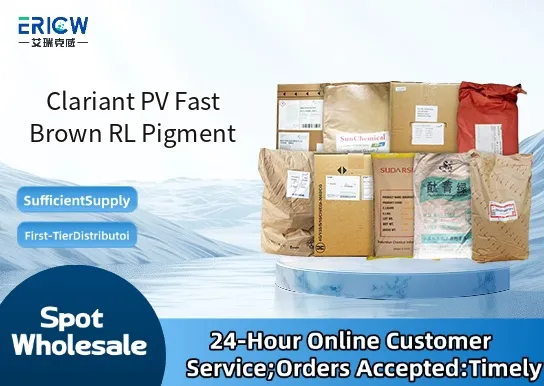
High tinctorial strength with excellent color consistency across batches.
Outstanding thermal stability suitable for high-temperature polymer processing up to 280 °C.
Good lightfastness and weather resistance in outdoor applications.
Low migration behavior in PVC, polyolefins, and engineering plastics.
Optimized dispersibility in both aqueous and solvent-based systems.
Polyvinyl chloride (PVC) profiles and window frames.
Polyolefin fibers and nonwovens for automotive interiors.
Engineering thermoplastics including ABS and polycarbonate.
Masterbatches for injection molding and extrusion processes.
Coatings for industrial and architectural applications.
| Chemical Type | Organic Pigment (Pigment Violet 23 derivative) |
| Product Form | Free-flowing powder |
| Appearance | Reddish-brown powder |
| Primary Applications | PVC, polyolefins, engineering plastics, masterbatches, coatings |
| Key Features | Thermal stability, low migration, high dispersion efficiency |
| Benefits | Color consistency, process reliability, compliance with major regulatory frameworks (e.g., REACH, RoHS) |
| Particle Size (D50) | Approx. 0.15–0.25 µm |
| Specific Surface Area | 45–60 m²/g |
Q1: What is the primary chemical class of PV Fast Brown RL?
A: PV Fast Brown RL is an organic pigment belonging to the azo pigment family, specifically a disazo condensation type, offering high tinting strength and good thermal stability for demanding industrial applications.
Q2: Is this pigment suitable for use in food-contact plastics?
A: PV Fast Brown RL is not approved for direct food-contact applications under major global regulatory frameworks. It is intended for general-purpose industrial plastics, coatings, and inks where regulatory compliance for food contact is not required.
Q3: How does PV Fast Brown RL perform under outdoor weathering conditions?
A: This pigment exhibits moderate to good lightfastness and weather resistance in polyolefin and PVC systems, particularly when stabilized with appropriate UV absorbers and HALS. Performance varies depending on polymer matrix, thickness, and exposure environment.
Q4: What are typical dosage levels in plastic coloration?
A: Dosage depends on formulation requirements and desired shade intensity, but it is typically used at low concentrations—generally ranging from 0.1% to 2% by weight in most thermoplastic applications such as PP, PE, and PVC.
Q5: Can PV Fast Brown RL be used in water-based ink systems?
A: Yes, it can be formulated into water-based gravure and flexographic inks when properly dispersed using compatible surfactants and dispersing agents. However, its performance must be validated in the specific ink vehicle due to sensitivity to pH and electrolyte content.
Contact With Us:
E-mail: wangxingqiang@ericwchem.com
Have a Questions? Call Us:
Add:
Building A1, Jiete Industrial Park, Huangpu District, Guangzhou City, Guangdong Province, China