English
 Español
 tiếng việt
 русский
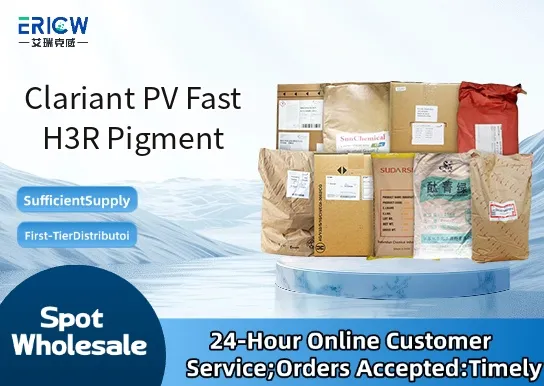
High chroma and excellent color strength for vibrant, consistent red hues.
Outstanding thermal stability suitable for high-temperature processing up to 280 °C.
Good lightfastness and weather resistance in demanding outdoor applications.
Low volatility and minimal extractables, supporting compliance with stringent regulatory requirements.
Optimized dispersibility in both polar and non-polar polymer matrices.
Polyolefin fibers and spunbond nonwovens for automotive and hygiene products.
Engineering plastics including polypropylene (PP), polyethylene (PE), and ABS.
Masterbatch formulations for injection molding and extrusion processes.
Coatings and inks requiring high-gloss, durable red coloration.
Food-contact-compliant packaging films where regulatory safety is critical.
| Chemical Type | Quinacridone derivative (Pigment Violet 19) |
| Product Form | Fine powder |
| Appearance | Violet-red free-flowing powder |
| Primary Applications | Polyolefins, engineering plastics, coatings, inks |
| Key Features | Thermal stability, low extractables, high tinctorial strength |
| Regulatory Compliance | EU REACH registered; compliant with FDA 21 CFR §178.3297 (for food-contact use) |
| Recommended Processing Temperature | Up to 280 °C (short-term) |
| Particle Size (D50) | Approx. 0.15–0.25 µm |
Q1: What is the primary chemical class and typical application domain for PV Fast H3R?
A: PV Fast H3R is a high-performance quinacridone-based organic pigment, widely used in demanding applications such as automotive coatings, industrial finishes, and high-gloss plastics where excellent lightfastness, thermal stability, and color strength are required.
Q2: Is PV Fast H3R suitable for use in food-contact plastics or packaging inks?
A: PV Fast H3R is not specifically designed or certified for direct food-contact applications. Its suitability for regulated end-uses depends on full formulation compliance with applicable regional regulatory frameworks, and users must conduct their own due diligence and testing to confirm compliance.
Q3: How does PV Fast H3R perform under high-temperature processing conditions?
A: This pigment exhibits good thermal stability and is generally suitable for processing temperatures encountered in polyolefin and engineering plastic compounding, as well as in baking-type coating systems—though exact stability limits depend on residence time, atmosphere, and vehicle composition.
Q4: What dispersion methods are recommended to achieve optimal color development and stability?
A: Optimal performance is typically achieved using high-shear dispersion techniques—such as bead milling or high-speed dissolvers—in compatible resin systems. Pre-dispersed concentrates or surface-treated grades may be preferred depending on the base medium and required rheology.
Q5: What is the typical dosage range when using PV Fast H3R in solvent-borne industrial coatings?
A: Dosage is formulation-dependent but generally ranges from 0.1% to 2% by weight relative to total solids, with lower concentrations often sufficient due to its high tinting strength and chroma.
Contact With Us:
E-mail: wangxingqiang@ericwchem.com
Have a Questions? Call Us:
Add:
Building A1, Jiete Industrial Park, Huangpu District, Guangzhou City, Guangdong Province, China