English
 Español
 tiếng việt
 русский
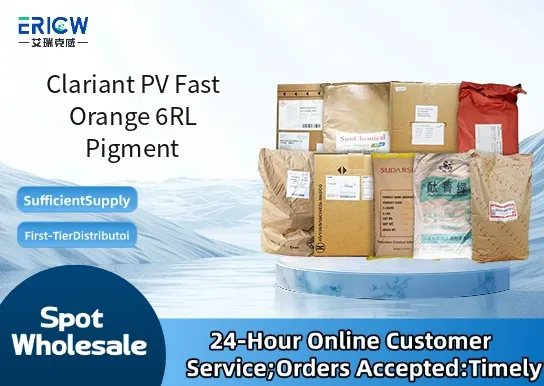
High chroma and clean reddish-orange shade with excellent color strength.
Outstanding thermal stability suitable for processing up to 280 °C.
Good lightfastness and weather resistance in demanding outdoor applications.
Excellent dispersibility in both polar and non-polar polymer systems.
Compliant with major global regulatory frameworks including REACH and RoHS.
Automotive interior and exterior plastic parts (PP, ABS, PC/ABS).
Packaging films and containers requiring FDA-compliant colorants (where approved).
Household appliances and consumer electronics housings.
Engineering plastics used in under-hood automotive components.
Industrial coatings for durable goods and machinery.
| Chemical Type | Polycyclic Pigment (Perylene derivative) |
| Product Form | Free-flowing powder |
| Appearance | Orange-red free-flowing powder |
| Primary Applications | Plastics (especially polyolefins and engineering resins), coatings |
| Key Features | High heat stability, good migration resistance, low volatility |
| Benefits | Consistent batch-to-batch color reproducibility and processing robustness |
| Regulatory Status | REACH registered; compliant with EU Directive 2002/72/EC for food-contact plastics (subject to specific conditions) |
| Density (approx.) | 1.55 g/cm³ |
Q1: What is the primary chemical class of PV Fast Orange 6RL?
A: PV Fast Orange 6RL is a high-performance monoazo pigment, specifically classified as a beta-naphthol-based organic pigment, offering strong tinting strength and good thermal stability for demanding industrial applications.
Q2: Is PV Fast Orange 6RL suitable for use in food-contact plastics?
A: This pigment is not approved for direct food-contact applications under major global regulatory frameworks. It is intended for general-purpose industrial plastics, coatings, and inks where regulatory compliance for food contact is not required.
Q3: How does PV Fast Orange 6RL perform under heat during processing?
A: It demonstrates good thermal stability, typically withstanding temperatures up to approximately 250–270 °C for short residence times in standard polymer processing conditions, making it suitable for polyolefins and engineering thermoplastics.
Q4: What are common dispersion methods recommended for optimal performance?
A: Effective dispersion is best achieved using high-shear compounding equipment—such as twin-screw extruders or high-speed dispersers—with appropriate carrier resins and dispersing aids tailored to the target polymer system.
Q5: Can PV Fast Orange 6RL be used in water-based systems?
A: While primarily designed for solvent-based inks and melt-processing applications, it can be formulated into aqueous dispersions using suitable surfactants and stabilization techniques—but requires dedicated dispersion development and compatibility testing.
Contact With Us:
E-mail: wangxingqiang@ericwchem.com
Have a Questions? Call Us:
Add:
Building A1, Jiete Industrial Park, Huangpu District, Guangzhou City, Guangdong Province, China