English
 Español
 tiếng việt
 русский
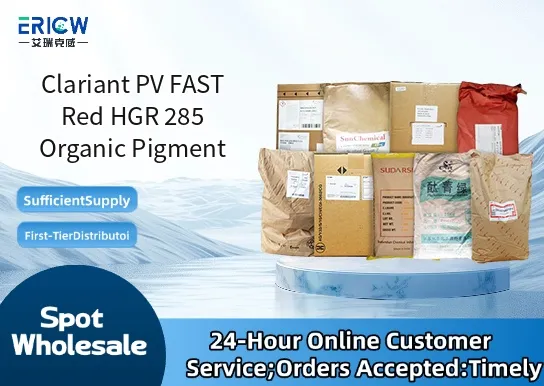
High chroma and excellent red shade strength for vibrant, consistent coloration.
Outstanding thermal stability up to 280 °C, suitable for demanding polymer processing conditions.
Good lightfastness and weather resistance in outdoor applications.
Low migration tendency in PVC, polyolefins, and engineering plastics.
Optimized particle size distribution for enhanced dispersion and gloss retention.
Polyvinyl chloride (PVC) profiles and window frames.
Polyolefin fibers and injection-molded automotive interior parts.
Masterbatches for food-contact-compliant packaging films.
Engineering thermoplastics including ABS and polycarbonate.
Coatings requiring high color purity and heat resistance.
| Chemical Type | Disazo pigment (C.I. Pigment Red 170) |
| Product Form | Free-flowing powder |
| Appearance | Reddish-orange powder |
| Primary Applications | PVC, polyolefins, ABS, masterbatches, coatings |
| Key Features | High thermal stability, low migration, excellent dispersibility |
| Benefits | Color consistency, process robustness, regulatory compliance (EU REACH, FDA compliant for selected grades) |
| Density (g/cm³) | ~1.55 |
| Volatile Matter (wt%, 105 °C) | ≤1.5% |
Q1: What are the primary application areas for PV FAST Red HGR 285?
A: PV FAST Red HGR 285 is widely used in high-performance industrial coatings, including automotive refinish and coil coatings, as well as in selected engineering plastics where excellent heat stability, lightfastness, and migration resistance are required.
Q2: How does PV FAST Red HGR 285 perform under thermal processing conditions?
A: This pigment exhibits good thermal stability, making it suitable for standard melt-processing temperatures encountered in polyolefins and certain engineering thermoplastics. Performance should be verified under actual processing conditions, especially for extended residence times or elevated temperatures above 260 °C.
Q3: Is PV FAST Red HGR 285 suitable for food-contact applications?
A: PV FAST Red HGR 285 is not pre-approved for direct food-contact applications under major regulatory frameworks. Its use in food-contact materials requires full formulation-level compliance assessment by the end-user, including evaluation of extraction behavior and adherence to applicable regional regulations.
Q4: What is the typical dosage range in polymer systems?
A: Dosage depends on the specific polymer matrix, desired shade strength, and performance requirements, but it is typically used at low concentrations—generally ranging from 0.1% to 2% by weight—to achieve optimal dispersion, color development, and cost-efficiency.
Contact With Us:
E-mail: wangxingqiang@ericwchem.com
Have a Questions? Call Us:
Add:
Building A1, Jiete Industrial Park, Huangpu District, Guangzhou City, Guangdong Province, China