English
 Español
 tiếng việt
 русский
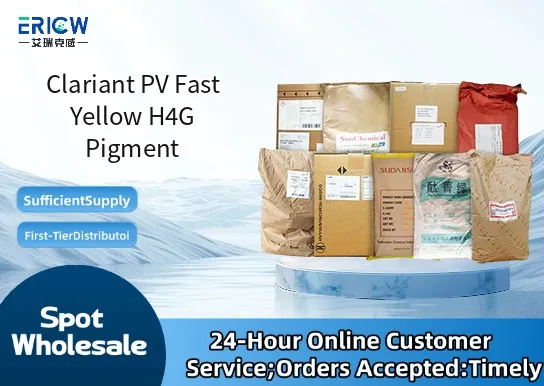
High chroma and excellent color strength for vibrant, clean yellow shades.
Outstanding thermal stability suitable for high-temperature processing up to 280 °C.
Good lightfastness and weather resistance in demanding outdoor applications.
Excellent dispersibility in both polar and non-polar polymer systems.
Low volatility and minimal plate-out tendency during extrusion and injection molding.
Polyolefin masterbatches (PP, PE) for packaging and consumer goods.
Engineering plastics including ABS, PS, and PC for automotive interior components.
Flexible and rigid PVC for profiles, flooring, and wire & cable sheathing.
Thermoplastic elastomers (TPE) used in seals, grips, and medical device housings.
Coatings for industrial maintenance and functional plastic parts.
| Chemical Type | Disazo pigment (Pigment Yellow 12) |
| Product Form | Fine powder |
| Appearance | Bright greenish-yellow powder |
| Primary Applications | Polyolefins, PVC, engineering plastics, coatings |
| Key Features | High heat stability, good dispersion, low migration |
| Benefits | Consistent color batch-to-batch, reduced processing defects |
| Regulatory Compliance | REACH registered; compliant with EU Directive 2002/72/EC for food-contact plastics (subject to specific conditions) |
| Storage Conditions | Store in a cool, dry place below 30 °C; protect from moisture and direct sunlight |
Q1: What is the primary chemical class and pigment type of PV Fast Yellow H4G?
A: PV Fast Yellow H4G is a high-performance monoazo pigment, classified under the Colour Index as Pigment Yellow 83 (PY83), offering strong tinting strength, good lightfastness, and balanced heat stability for demanding industrial applications.
Q2: Is PV Fast Yellow H4G suitable for use in food-contact plastics?
A: This pigment is not certified for direct food-contact applications under major regulatory frameworks. It is intended for general-purpose industrial plastics, coatings, and inks where regulatory compliance for food contact is not required.
Q3: How does PV Fast Yellow H4G perform in polyolefin processing, particularly during high-temperature extrusion?
A: The pigment demonstrates good thermal stability in polyolefin systems, maintaining color integrity during standard PP and PE extrusion processes. For extended residence times or very high melt temperatures (>260 °C), stabilization additives and process optimization are recommended to preserve hue and dispersion quality.
Q4: What is the typical dosage range when using PV Fast Yellow H4G in solvent-based industrial coatings?
A: Dosage depends on formulation requirements and desired opacity or chroma, but it is typically used at low concentrations—generally ranging from 0.1% to 2% by weight relative to total solids—to achieve optimal color development and cost efficiency.
Contact With Us:
E-mail: wangxingqiang@ericwchem.com
Have a Questions? Call Us:
Add:
Building A1, Jiete Industrial Park, Huangpu District, Guangzhou City, Guangdong Province, China