English
 Español
 tiếng việt
 русский
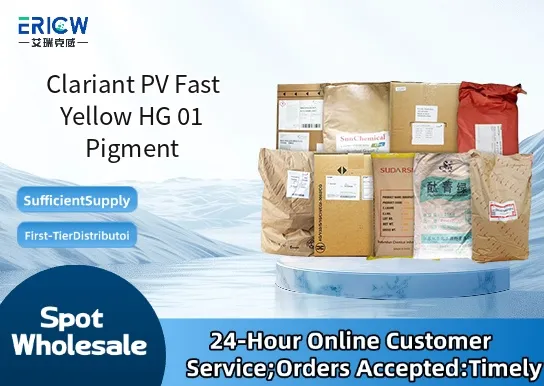
High chroma and clean greenish-yellow hue for vibrant coloration.
Excellent heat stability up to 280 °C, suitable for demanding polymer processing.
Outstanding lightfastness and weather resistance in outdoor applications.
Good dispersibility in both polar and non-polar media, including polyolefins and PVC.
Low migration tendency, meeting stringent regulatory requirements for food-contact plastics.
Polyolefin packaging films and containers (e.g., PP, HDPE).
Automotive interior plastics requiring long-term color retention.
Household appliances and consumer electronics housings.
Coated paper and board for premium labeling and folding cartons.
Masterbatch formulations for injection molding and blow molding processes.
| Chemical Type | Disazo pigment (Pigment Yellow 12) |
| Product Form | Fine powder |
| Appearance | Yellow crystalline powder |
| Primary Applications | Polyolefins, PVC, PS, ABS, coatings, inks |
| Key Features | High tinctorial strength, excellent dispersion, thermal stability |
| Benefits | Consistent batch-to-batch color, low dusting, regulatory compliant |
| Regulatory Status | EU REACH registered; compliant with FDA 21 CFR §178.3297 for food-contact plastics |
| Recommended Processing Temperature Range | Up to 280 °C (short-term) |
Q1: What is the primary chemical class of PV Fast Yellow HG 01?
A: PV Fast Yellow HG 01 is a high-performance monoazo pigment, specifically developed for demanding industrial applications requiring excellent lightfastness and thermal stability.
Q2: Is this pigment suitable for use in food-contact plastics?
A: PV Fast Yellow HG 01 is not certified for direct food-contact applications. It is intended for general-purpose industrial plastics, coatings, and inks where regulatory compliance for food contact is not required.
Q3: How does this pigment perform under high-temperature processing conditions?
A: This pigment exhibits good thermal stability and is suitable for standard thermoplastic processing methods including injection molding and extrusion at typical operating temperatures, though extended residence time at upper temperature limits should be evaluated in the final system.
Q4: What are the recommended dispersion methods for optimal color development?
A: For best results, high-shear dispersion using twin-screw extruders or bead mills is recommended. Pre-treatment with compatible dispersants may enhance wetting and stability, particularly in non-polar polymer matrices.
Q5: Can PV Fast Yellow HG 01 be used in water-based systems?
A: While primarily designed for solvent-based and polymer systems, it can be formulated into water-based dispersions with appropriate surfactants and stabilization technology—however, performance and long-term storage stability must be validated case by case.
Contact With Us:
E-mail: wangxingqiang@ericwchem.com
Have a Questions? Call Us:
Add:
Building A1, Jiete Industrial Park, Huangpu District, Guangzhou City, Guangdong Province, China