English
 Español
 tiếng việt
 русский
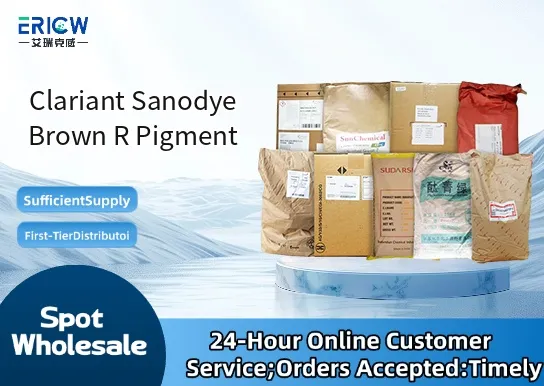
High tinctorial strength with excellent batch-to-batch consistency.
Good thermal stability suitable for medium-temperature polymer processing.
Outstanding lightfastness and weather resistance in outdoor applications.
Low migration behavior in PVC, polyolefins, and engineering thermoplastics.
Free-flowing powder form with optimized particle size distribution for easy dispersion.
PVC profiles and window frames.
Automotive interior trim components.
Household appliances housings.
Industrial coatings and coil coatings.
Plastic packaging films requiring food-contact compliance (EU 10/2011).
| Chemical Type | Azo pigment (Benzimidazolone derivative) |
| Product Form | Free-flowing dry powder |
| Appearance | Uniform reddish-brown powder |
| Primary Applications | PVC, polyolefins, ABS, PS, and coatings |
| Key Features | High opacity, low volatility, non-bleeding |
| Benefits | Reduced dosage requirement, improved processing efficiency, enhanced color durability |
| Regulatory Compliance | REACH registered; compliant with EU RoHS Directive |
| Recommended Processing Temperature Range | 140–220 °C |
Q1: What is the primary chemical class of Clariant Sanodye Brown R Pigment?
A: Sanodye Brown R is an organic pigment based on a monoazo structure, specifically engineered for high tinctorial strength and good thermal stability in polymer systems.
Q2: Is this pigment suitable for food-contact plastics?
A: Sanodye Brown R is designed for general-purpose coloring of thermoplastics and is not pre-approved for direct food-contact applications. Regulatory compliance must be verified case-by-case with the final formulation and processing conditions.
Q3: What are typical dosage levels when using this pigment in polyolefins?
A: Dosage depends on the desired shade intensity and substrate, but it is typically used at low concentrations—generally ranging from 0.1% to 2% by weight in polyolefin compounds.
Q4: How does Sanodye Brown R perform under standard injection molding conditions?
A: The pigment demonstrates good thermal stability up to approximately 280 °C, making it suitable for conventional injection molding of polypropylene and HDPE without significant decomposition or color shift.
Contact With Us:
E-mail: wangxingqiang@ericwchem.com
Have a Questions? Call Us:
Add:
Building A1, Jiete Industrial Park, Huangpu District, Guangzhou City, Guangdong Province, China