English
 Español
 tiếng việt
 русский
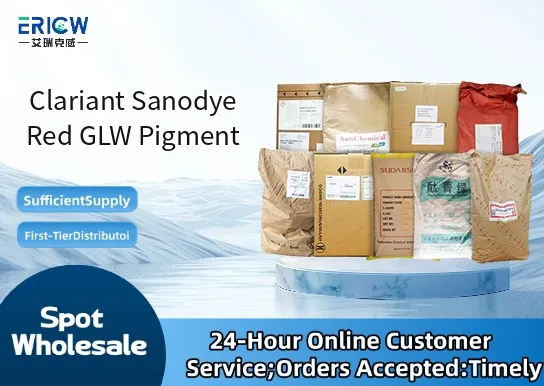
High chroma and excellent color strength for vibrant, consistent red shades.
Outstanding thermal stability suitable for high-temperature processing up to 280 °C.
Good lightfastness and weather resistance in demanding outdoor applications.
Low migration behavior, ensuring color integrity in PVC, polyolefins, and styrenics.
EcoVadis-verified sustainable pigment with REACH-compliant manufacturing and low heavy metal content.
PVC profiles and window frames requiring long-term color retention.
Injection-molded polypropylene (PP) automotive interior parts.
Masterbatches for food-contact-compliant packaging films.
Extruded rigid PVC pipes and fittings.
Thermoplastic elastomer (TPE) consumer goods and seals.
| Chemical Type | Quinacridone-based organic pigment |
| Product Form | Fine free-flowing powder |
| Appearance | Red-violet powder with uniform particle distribution |
| Primary Applications | PVC, PP, PE, PS, ABS, TPE |
| Key Features | High tinctorial strength, low dusting, excellent dispersibility |
| Benefits | Reduced dosage requirement, improved processing efficiency, consistent batch-to-batch performance |
| Regulatory Compliance | REACH registered; compliant with EU Directive 2002/72/EC for food contact (subject to specific conditions) |
| Storage Conditions | Store in cool, dry place below 30 °C; protect from moisture and direct sunlight |
Q1: What is the primary application area for Sanodye Red GLW pigment?
A: Sanodye Red GLW is a high-performance, solvent-stable azo pigment specifically developed for coloring polyolefin-based packaging films and injection-molded containers—particularly where excellent heat stability, low extractability, and consistent shade reproducibility are required.
Q2: Is Sanodye Red GLW suitable for food-contact applications?
A: Yes—Sanodye Red GLW is formulated to meet global regulatory expectations for indirect food contact in polyolefins, including compliance with FDA 21 CFR §178.3297 and EU Framework Regulation (EC) No 1935/2004. Final compliance depends on full formulation, processing conditions, and end-use migration testing.
Q3: How does Sanodye Red GLW perform during high-temperature processing?
A: It exhibits excellent thermal stability up to typical polyolefin processing temperatures (e.g., extrusion and injection molding at 200–260 °C), with minimal color shift or degradation—making it well-suited for demanding melt-processing operations.
Q4: What is the recommended dosage range for optimal performance?
A: Dosage depends on the desired shade intensity and polymer matrix, but it is typically used at low concentrations—generally ranging from 0.1% to 2% by weight in polypropylene or polyethylene—while maintaining excellent dispersion and color strength.
Contact With Us:
E-mail: wangxingqiang@ericwchem.com
Have a Questions? Call Us:
Add:
Building A1, Jiete Industrial Park, Huangpu District, Guangzhou City, Guangdong Province, China