English
 Español
 tiếng việt
 русский
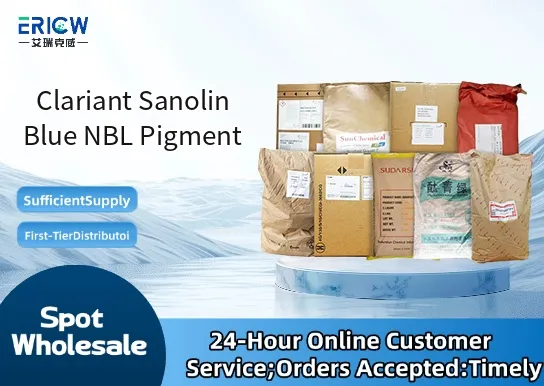
High chroma, clean phthalocyanine-based blue shade with excellent lightfastness.
Outstanding thermal stability suitable for high-temperature polymer processing up to 260 °C.
Good dispersibility in both polar and non-polar media, including polyolefins and engineering plastics.
Low volatility and negligible extractables—compliant with stringent food-contact and toy safety regulations.
Consistent batch-to-batch color performance ensured by Clariant’s certified quality control system.
Polypropylene (PP) and polyethylene (PE) packaging films and containers.
Automotive interior components requiring long-term UV and heat resistance.
Household appliances and consumer electronics housings.
Masterbatch formulations for injection molding and extrusion processes.
Engineering thermoplastics such as ABS, PS, and PC blends.
| Chemical Type | Copper phthalocyanine (β-phase) |
| Product Form | Free-flowing powder |
| Appearance | Dark blue to greenish-blue fine powder |
| Primary Applications | Polyolefins, engineering plastics, masterbatches |
| Key Features | Thermal stability, low migration, high tinctorial strength |
| Regulatory Compliance | EU REACH registered; compliant with FDA 21 CFR §178.3297 and EN 71-3 |
| Particle Size (D50) | Approx. 0.08–0.12 µm (by laser diffraction) |
| Heat Stability | Stable up to 260 °C for 5 min (in PP) |
Q1: What is the primary chemical class of Sanolin Blue NBL?
A: Sanolin Blue NBL is a high-performance, non-ionic phthalocyanine-based organic pigment, engineered for excellent chromatic strength and lightfastness in demanding applications.
Q2: Is Sanolin Blue NBL suitable for food-contact plastics?
A: Sanolin Blue NBL is not pre-approved for direct food-contact applications. Its suitability depends on final regulatory assessment by the formulator, including migration testing and compliance with applicable regional food-contact legislation.
Q3: How does Sanolin Blue NBL perform under heat during processing?
A: This pigment exhibits good thermal stability and is generally suitable for standard polymer processing conditions, including injection molding and extrusion of polyolefins and engineering thermoplastics—though optimal dispersion and minimal residence time at peak temperature are recommended to preserve color integrity.
Q4: What is the typical dosage range when using Sanolin Blue NBL in plastic masterbatches?
A: Dosage depends on the required shade depth and base polymer, but it is typically used at low concentrations—generally ranging from 0.1% to 2% by weight in masterbatch formulations.
Q5: Does Sanolin Blue NBL require special handling or safety precautions during compounding?
A: As with all fine organic pigments, appropriate industrial hygiene practices should be followed—including local exhaust ventilation and avoidance of airborne dust generation—to minimize inhalation exposure during dry handling and dispersion.
Contact With Us:
E-mail: wangxingqiang@ericwchem.com
Have a Questions? Call Us:
Add:
Building A1, Jiete Industrial Park, Huangpu District, Guangzhou City, Guangdong Province, China