English
 Español
 tiếng việt
 русский
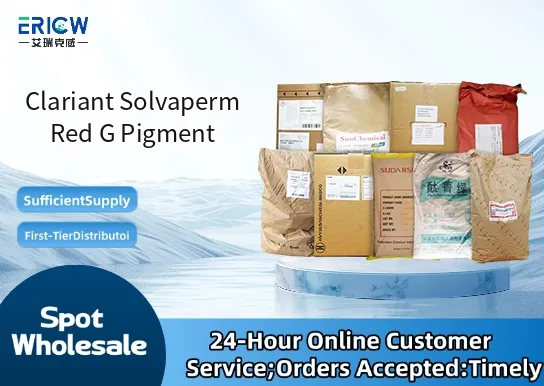
High thermal stability suitable for demanding processing conditions up to 280 °C.
Excellent lightfastness and weather resistance in outdoor applications.
Good solvent resistance in aromatic and aliphatic hydrocarbons, ketones, and esters.
Consistent batch-to-batch color strength and hue for reliable formulation performance.
Low volatility and minimal migration in polymer matrices, enhancing long-term color integrity.
Engineering plastics including polyamide (PA), polybutylene terephthalate (PBT), and polyethylene terephthalate (PET).
Automotive interior and exterior components requiring high UV and heat resistance.
Consumer electronics housings and connectors where dimensional stability and color fidelity are critical.
Industrial coatings for metal and plastic substrates exposed to harsh environments.
Masterbatch concentrates for injection molding and extrusion processes.
| Chemical Type | Quinacridone derivative |
| Product Form | Fine crystalline powder |
| Appearance | Red-violet free-flowing powder |
| Primary Applications | High-performance engineering thermoplastics and industrial coatings |
| Key Features | Thermal stability, lightfastness, solvent resistance |
| Benefits | Color consistency, low migration, excellent dispersion |
| Regulatory Compliance | REACH registered; compliant with EU Directive 2002/72/EC for food-contact plastics (subject to specific migration limits) |
| Storage Conditions | Store in cool, dry place below 30 °C; protect from moisture and direct sunlight |
Q1: What is the primary chemical class of Solvaperm Red G?
A: Solvaperm Red G is a high-performance quinacridone-based organic pigment, known for its excellent lightfastness, thermal stability, and resistance to solvents and migration in demanding applications.
Q2: Is Solvaperm Red G suitable for food-contact packaging inks?
A: Solvaperm Red G is designed for use in packaging inks where regulatory compliance is required; however, final suitability for food-contact applications depends on full formulation assessment, processing conditions, and adherence to applicable regional regulations—users must conduct appropriate migration testing and obtain regulatory confirmation for their specific end-use.
Q3: How does Solvaperm Red G perform in flexographic and gravure inks?
A: Solvaperm Red G demonstrates excellent dispersibility in both solvent-based and low-VOC ink systems, delivering strong tinting strength, consistent print quality, and good rub resistance—making it well-suited for high-speed flexographic and gravure printing on flexible packaging substrates.
Q4: What are the recommended dispersion methods for optimal performance?
A: Optimal dispersion is typically achieved using high-shear mixing or bead milling in compatible solvent or resin systems; pre-wetting with suitable vehicles and controlled temperature profiles help ensure stable, fine-particle dispersions that maximize color development and rheological behavior.
Q5: Can Solvaperm Red G be used in combination with other pigments?
A: Yes—Solvaperm Red G exhibits good compatibility with many common organic and inorganic pigments in multi-color ink formulations, though compatibility testing is recommended to verify color stability, dispersion integrity, and absence of flocculation under intended processing and storage conditions.
Contact With Us:
E-mail: wangxingqiang@ericwchem.com
Have a Questions? Call Us:
Add:
Building A1, Jiete Industrial Park, Huangpu District, Guangzhou City, Guangdong Province, China