English
 Español
 tiếng việt
 русский
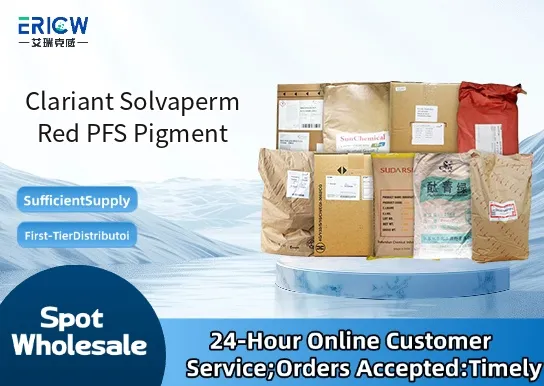
High chroma and excellent red shade purity for vibrant, consistent coloration.
Outstanding solvent resistance—suitable for demanding solvent-based ink and coating systems.
Good thermal stability up to 200 °C, enabling compatibility with high-temperature processing.
Excellent lightfastness (ISO 105-B02: Grade 7–8) for long-term outdoor durability.
Low volatility and minimal extractables—meets stringent regulatory requirements for packaging inks.
Flexible packaging inks (gravure and flexo) for food and pharmaceutical packaging.
Solvent-based industrial coatings for automotive trim and plastic substrates.
High-performance gravure inks for laminated pouches and metallized films.
Plastic color concentrates for polyolefins and PET requiring FDA-compliant migration performance.
Specialty screen printing inks for technical textiles and synthetic leather.
| Chemical Type | Quinacridone derivative |
| Product Form | Fine powder |
| Appearance | Red-violet free-flowing powder |
| Primary Applications | Solvent-based inks, plastic color concentrates, industrial coatings |
| Key Features | Solvent resistance, thermal stability, low extractables |
| Benefits | Color consistency, regulatory compliance, process robustness |
| Regulatory Status | EU REACH registered; compliant with EU Plastics Regulation (EU) No 10/2011 for food contact |
| Particle Size (D50) | Approx. 0.12–0.16 µm |
Q1: What is the primary chemical class of Solvaperm Red PFS?
A: Solvaperm Red PFS is a high-performance perylene-based organic pigment, known for its excellent thermal stability, lightfastness, and solvent resistance in demanding industrial applications.
Q2: Is Solvaperm Red PFS suitable for food-contact inks or coatings?
A: Solvaperm Red PFS is not pre-qualified for direct food-contact applications. Its use in such systems requires full regulatory assessment by the formulator, including compliance with applicable regional food contact regulations and migration testing under actual end-use conditions.
Q3: How does Solvaperm Red PFS perform in high-temperature processing environments?
A: This pigment exhibits strong thermal stability and is commonly used in applications involving extrusion, calendering, or high-bake coating processes where pigment decomposition or hue shift must be avoided.
Q4: What types of resins or binders show good compatibility with Solvaperm Red PFS?
A: Solvaperm Red PFS demonstrates broad compatibility with common industrial resin systems, including nitrocellulose, acrylics, polyurethanes, and chlorinated polyolefins—particularly in gravure and flexographic inks, as well as engineering plastic color concentrates.
Q5: What is the typical dosage range when using Solvaperm Red PFS in ink or plastic formulations?
A: Dosage depends on formulation requirements and desired opacity or chroma, but it is typically used at low concentrations—generally ranging from 0.1% to 2% by weight—due to its high tinctorial strength and efficient dispersion characteristics.
Contact With Us:
E-mail: wangxingqiang@ericwchem.com
Have a Questions? Call Us:
Add:
Building A1, Jiete Industrial Park, Huangpu District, Guangzhou City, Guangdong Province, China