English
 Español
 tiếng việt
 русский
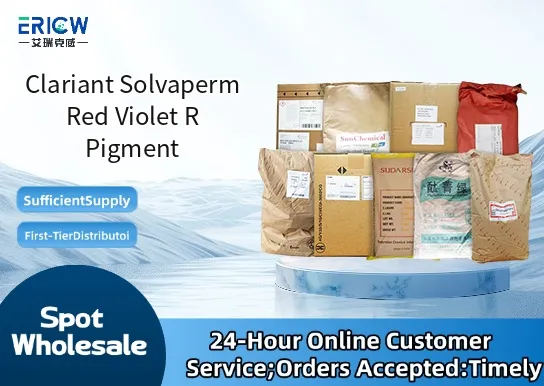
High chroma and excellent lightfastness in solvent-based systems.
Outstanding thermal stability suitable for high-temperature processing up to 200 °C.
Good dispersibility in polar and non-polar organic solvents, including esters and ketones.
Low volatility and negligible migration in plasticized PVC and flexible films.
Compliant with major global regulatory frameworks for industrial inks and coatings (e.g., REACH, RoHS).
Solvent-based gravure and flexographic inks for packaging films.
Automotive interior trim coatings requiring color consistency and durability.
Engineering plastics such as ABS, PS, and PC for decorative components.
PVC compounds for wire & cable sheathing and medical tubing.
Specialty coatings for consumer electronics housings and appliances.
| Chemical Type | Quinacridone derivative pigment |
| Product Form | Fine powder |
| Appearance | Red-violet free-flowing powder |
| Primary Applications | Inks, coatings, engineering plastics, flexible PVC |
| Key Features | High tinctorial strength, excellent dispersion stability |
| Benefits | Reduced dosage requirement, improved batch-to-batch color match |
| Heat Resistance | Up to 200 °C (short-term) |
| Lightfastness (ISO 105-B02) | Grade 7–8 (on acrylic resin) |
Q1: What solvent-based systems is Solvaperm Red Violet R best suited for?
A: Solvaperm Red Violet R is specifically engineered for high-performance solvent-based inks, coatings, and overprint varnishes, offering excellent solubility and dispersion stability in aromatic and aliphatic hydrocarbon, ester, ketone, and nitrocellulose-compatible solvent blends.
Q2: How does this pigment perform under heat and light exposure during processing or end-use?
A: Solvaperm Red Violet R demonstrates good thermal stability up to typical solvent ink drying and curing temperatures, and offers moderate to good lightfastness depending on the vehicle and film thickness—making it suitable for indoor applications and short-to-medium term outdoor exposure when appropriately protected.
Q3: Is Solvaperm Red Violet R compatible with nitrocellulose (NC) and acrylic resin systems?
A: Yes—it is widely used in both nitrocellulose-based gravure and flexo inks, as well as in acrylic and vinyl copolymer solvent systems, where it delivers strong tinting strength and consistent rheological behavior without adverse interactions.
Q4: What is the typical dosage range for optimal color development and processability?
A: Dosage depends on formulation requirements, but it is typically used at low concentrations—generally ranging from 0.1% to 2% by weight in finished ink or coating systems—to achieve vibrant violet-red shades while maintaining viscosity and drying performance.
Q5: Does this pigment require special handling or dispersion protocols?
A: For optimal performance, pre-dispersion using high-shear mixing or bead milling in the target solvent/resin medium is recommended. Avoid prolonged exposure to strong acids or highly polar protic solvents that may affect its molecular integrity.
Contact With Us:
E-mail: wangxingqiang@ericwchem.com
Have a Questions? Call Us:
Add:
Building A1, Jiete Industrial Park, Huangpu District, Guangzhou City, Guangdong Province, China