English
 Español
 tiếng việt
 русский
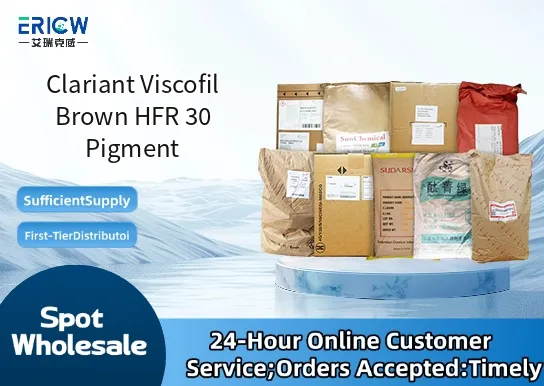
High thermal stability suitable for demanding extrusion and injection molding processes.
Excellent lightfastness and weather resistance for long-term outdoor performance.
Optimized dispersibility in polyolefin and engineering thermoplastic matrices.
Halogen-free formulation compliant with RoHS and REACH regulatory requirements.
Consistent batch-to-batch color reproducibility and low dust generation during handling.
Coloration of polypropylene (PP) automotive interior components.
Pigmentation of HDPE and LDPE packaging films requiring UV stability.
Masterbatch formulation for technical parts in appliances and consumer electronics.
Coloring of PA6 and PA66 engineering plastics for structural applications.
Industrial-grade plastic housings exposed to elevated temperatures and ambient UV.
| Chemical Type | Inorganic complex oxide pigment |
| Product Form | Free-flowing powder |
| Appearance | Brown powder with uniform particle distribution |
| Primary Applications | Polyolefins, polyamides, thermoplastic elastomers |
| Key Features | Halogen-free, heat-stable, non-migrating |
| Recommended Loading Range | 1.0–3.0 wt% depending on substrate and opacity requirement |
| Storage Conditions | Store in dry, cool, well-ventilated area; avoid moisture absorption |
| Regulatory Compliance | REACH registered; RoHS compliant; no SVHCs above threshold |
Q1: What is the primary application field for Viscofil Brown HFR 30?
A: Viscofil Brown HFR 30 is specifically developed for use in high-performance thermoplastic elastomers (TPEs), particularly in applications requiring excellent heat stability, low volatility, and consistent coloration during extrusion and injection molding processes.
Q2: Is this pigment suitable for food-contact or medical-grade TPE formulations?
A: Viscofil Brown HFR 30 is designed for technical and industrial TPE applications. While it meets stringent purity requirements for polymer coloration, formal compliance with food-contact or medical regulations depends on full system evaluation—including base polymer, processing conditions, and final article testing—by the compounder or end-user.
Q3: How does Viscofil Brown HFR 30 differ from standard organic brown pigments in TPEs?
A: Unlike conventional organic browns, Viscofil Brown HFR 30 features enhanced thermal stability and reduced migration tendency in flexible TPE matrices, offering improved color consistency after repeated thermal cycles and better resistance to blooming under dynamic mechanical stress.
Q4: What is the recommended dispersion method for optimal performance?
A: For best results, Viscofil Brown HFR 30 should be incorporated via masterbatch dilution or direct melt compounding using standard twin-screw extrusion equipment. Pre-drying is not required, but uniform feeding and sufficient shear history are essential to achieve full dispersion and color development.
Contact With Us:
E-mail: wangxingqiang@ericwchem.com
Have a Questions? Call Us:
Add:
Building A1, Jiete Industrial Park, Huangpu District, Guangzhou City, Guangdong Province, China