English
 Español
 tiếng việt
 русский
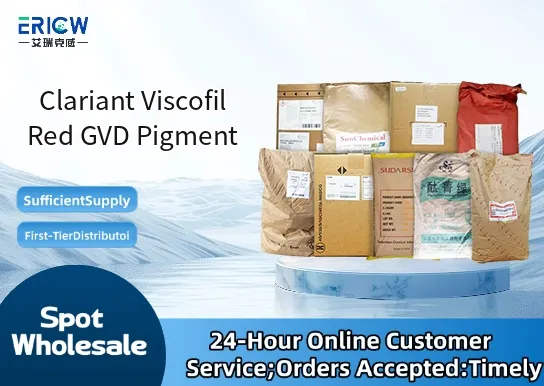
High chroma and clean red shade with excellent color strength.
Outstanding thermal stability suitable for high-temperature processing up to 280 °C.
Good dispersibility in polar and non-polar polymer matrices including PVC, PS, and ABS.
Excellent lightfastness and weather resistance per ISO 105-B02 (Grade 7–8).
Compliant with major global regulatory frameworks including EU REACH and US FDA 21 CFR §178.3297 for polymer colorants.
Coloration of rigid and flexible PVC for profiles, flooring, and wire & cable sheathing.
Transparent and opaque polystyrene (PS) applications including packaging and consumer goods.
Engineering thermoplastics such as ABS used in automotive interior components.
Masterbatch formulations for injection molding and extrusion processes.
Specialty applications requiring low extractables and high batch-to-batch consistency.
| Chemical Type | Disazo pigment (C.I. Pigment Red 170) |
| Product Form | Fine powder |
| Appearance | Reddish-brown free-flowing powder |
| Primary Applications | PVC, PS, ABS, and other engineering thermoplastics |
| Key Features | Thermal stability, high tinctorial strength, good dispersion |
| Benefits | Consistent hue, low migration, excellent processability |
| Regulatory Compliance | EU REACH registered; compliant with FDA 21 CFR §178.3297 |
| Recommended Processing Temperature Range | Up to 280 °C (short-term) |
Q1: What is the primary application field for Viscofil Red GVD?
A: Viscofil Red GVD is specifically engineered for coloration of viscose (rayon) and other regenerated cellulose fibers, including lyocell and modal, during the spinning or post-spinning dyeing process. It delivers high tinctorial strength and excellent wash- and light-fastness in these demanding cellulosic systems.
Q2: Is Viscofil Red GVD compatible with standard viscose spinning bath conditions?
A: Yes — Viscofil Red GVD is formulated to remain stable and uniformly dispersed under typical viscose spinning bath pH and temperature conditions. Its molecular design supports compatibility with common additives and co-colorants used in industrial viscose production without compromising filament integrity or filtration performance.
Q3: How does Viscofil Red GVD differ from conventional acid or reactive dyes in cellulose fiber applications?
A: Unlike acid or reactive dyes, Viscofil Red GVD is a pigment-based colorant designed for physical incorporation rather than chemical fixation. This enables superior migration control, reduced effluent load, and consistent shade reproducibility across batch variations—particularly valuable in continuous viscose spinning operations where dye uptake uniformity is critical.
Q4: What are the recommended handling and dispersion practices for optimal performance?
A: For best results, Viscofil Red GVD should be pre-dispersed using high-shear mixing in water or compatible carrier liquids prior to addition to the spinning dope. Avoid prolonged exposure to strongly alkaline media or excessive mechanical degradation during dispersion, as this may affect particle integrity and final color yield.
Q5: Can Viscofil Red GVD be used in combination with other Viscofil pigments?
A: Yes — Viscofil Red GVD is fully compatible with other pigments in the Viscofil portfolio, enabling broad shade development and fine-tuning of hue, brightness, and depth in viscose and related regenerated cellulose fibers. Compatibility testing under actual process conditions is recommended to confirm stability and color consistency.
Contact With Us:
E-mail: wangxingqiang@ericwchem.com
Have a Questions? Call Us:
Add:
Building A1, Jiete Industrial Park, Huangpu District, Guangzhou City, Guangdong Province, China