English
 Español
 tiếng việt
 русский
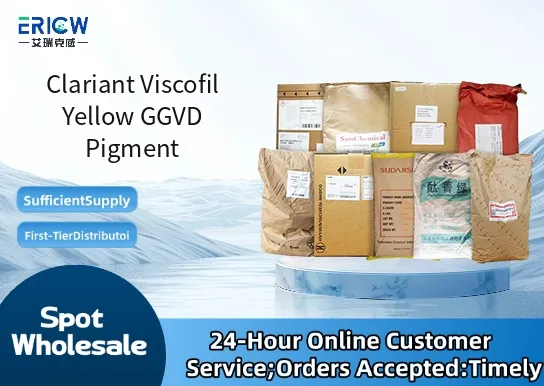
High chromatic strength and excellent color consistency in viscose and modal fiber spinning dyes.
Optimized solubility profile for stable dispersion in aqueous spinning dope systems.
Superior lightfastness and washfastness in regenerated cellulose fibers.
Low metal content ensuring compatibility with sensitive spinneret materials and process stability.
Designed for eco-efficient application—reduced salt and auxiliaries consumption during dyeing.
Viscose rayon staple fiber production.
Modal and lyocell fiber manufacturing.
Colored textile filaments for apparel and home textiles.
Technical fibers requiring consistent batch-to-batch hue accuracy.
Integrated pigment-dyeing processes in continuous spinning lines.
| Chemical Type | Azo pigment, chemically modified for fiber-reactive dispersion |
| Product Form | Fine free-flowing powder |
| Appearance | Yellow to orange-yellow powder |
| Primary Applications | Pigment-based dope dyeing of regenerated cellulose fibers |
| Key Features | High dispersibility, thermal stability up to 120 °C, low dust generation |
| Benefits | Reduced filtration clogging, improved dye uptake uniformity, lower effluent load |
| pH Stability Range | 4.5–7.5 (in aqueous dispersion) |
| Storage Conditions | Store in cool, dry place; protect from moisture and direct sunlight |
Q1: What is the primary application field for Viscofil Yellow GGVD?
A: Viscofil Yellow GGVD is a high-performance organic pigment specifically developed for coloring viscose (rayon) and other regenerated cellulose fibers during the spinning process. It is widely used in textile applications requiring excellent hue strength, lightfastness, and compatibility with viscose dope formulations.
Q2: Is Viscofil Yellow GGVD suitable for food-contact or medical-grade cellulose applications?
A: Viscofil Yellow GGVD is not certified for direct food-contact or implantable medical applications. Its use in functional textiles (e.g., hygiene products or technical fabrics) should be evaluated case-by-case based on end-product regulatory requirements and migration behavior under intended conditions.
Q3: How does Viscofil Yellow GGVD perform in terms of thermal stability during fiber spinning?
A: The pigment exhibits good thermal stability under typical viscose spinning conditions, maintaining color integrity without significant decomposition or discoloration during extrusion and coagulation. Performance may vary depending on dwell time, temperature profile, and chemical environment of the spinning bath.
Q4: What dispersion method is recommended for optimal incorporation into viscose dope?
A: For consistent color development and minimal filtration issues, pre-dispersion using high-shear mixing or bead milling—followed by dilution with compatible solvents or water—is strongly recommended. Final incorporation should occur under controlled pH and temperature to ensure colloidal stability in the dope.
Q5: Does Viscofil Yellow GGVD require special handling or storage conditions?
A: Store in a cool, dry place away from direct sunlight and moisture. Keep containers tightly sealed to prevent dust formation and avoid exposure to strong oxidizing agents. As with all fine organic pigments, appropriate industrial hygiene practices—including respiratory protection during manual handling—are advised.
Contact With Us:
E-mail: wangxingqiang@ericwchem.com
Have a Questions? Call Us:
Add:
Building A1, Jiete Industrial Park, Huangpu District, Guangzhou City, Guangdong Province, China