English
 Español
 tiếng việt
 русский
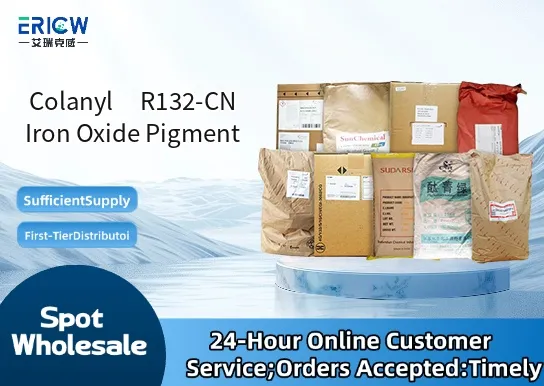
High chromatic strength with excellent tinting power in both aqueous and solvent-based systems.
Outstanding lightfastness and weather resistance, ensuring long-term color stability under UV exposure.
Optimized particle size distribution for smooth dispersion and minimal sedimentation in coatings and inks.
Low soluble salt content, enhancing corrosion inhibition performance in protective coatings.
Consistent batch-to-batch reproducibility meeting ISO 9001 manufacturing standards.
Architectural and industrial solvent-based and waterborne coatings.
Concrete and stucco colorants for precast and ready-mix applications.
Plastic masterbatches for PVC, polyolefins, and engineering resins.
Printing inks, especially for packaging and security printing requiring thermal and light stability.
Ceramic glazes and tile body coloration at firing temperatures up to 1200°C.
| Chemical Type | Synthetic α-Fe₂O₃ (hematite) |
| Product Form | Fine dry powder |
| Appearance | Reddish-brown free-flowing powder |
| Primary Applications | Coatings, construction materials, plastics, inks, ceramics |
| Key Features | High opacity, low oil absorption, good dispersibility |
| Benefits | Enhanced durability, reduced formulation complexity, regulatory compliance (REACH, RoHS) |
| Specific Gravity | 5.0–5.3 g/cm³ |
| pH (10% aqueous suspension) | 6.5–7.5 |
Q1: What is the primary chemical composition and crystal structure of Colanyl R132-CN?
A: Colanyl R132-CN is a synthetic iron oxide pigment based predominantly on hematite (α-Fe₂O₃), offering high color strength, excellent lightfastness, and thermal stability. Its particle morphology and surface treatment are optimized for dispersion and compatibility in demanding industrial systems.
Q2: Is Colanyl R132-CN suitable for use in coatings exposed to outdoor weathering?
A: Yes — this pigment exhibits outstanding UV resistance, low chromatic shift under prolonged sunlight exposure, and minimal chalk formation, making it well-suited for architectural, industrial, and protective coatings requiring long-term exterior durability.
Q3: How should Colanyl R132-CN be dispersed in solvent-based and water-based systems?
A: Optimal dispersion is achieved using high-shear mixing or bead milling. In solvent-based systems, compatibility with common resins (e.g., alkyds, acrylics, epoxies) is excellent; in water-based systems, performance benefits from appropriate dispersants and pH stabilization. Pre-wetting and gradual addition are recommended to avoid agglomeration.
Q4: Does Colanyl R132-CN contain heavy metals regulated under RoHS or REACH?
A: This pigment complies with current RoHS and REACH requirements for iron oxide pigments. It contains no intentionally added lead, mercury, cadmium, or hexavalent chromium, and its manufacturing process ensures trace metal levels remain consistently below applicable thresholds.
Q5: What is the typical dosage range for achieving full opacity in polymer masterbatches?
A: Dosage depends on polymer type, desired shade intensity, and processing conditions, but Colanyl R132-CN is typically used at low concentrations due to its high tinting strength — generally ranging from 0.1% to 2% by weight in most thermoplastic applications.
Contact With Us:
E-mail: wangxingqiang@ericwchem.com
Have a Questions? Call Us:
Add:
Building A1, Jiete Industrial Park, Huangpu District, Guangzhou City, Guangdong Province, China