English
 Español
 tiếng việt
 русский
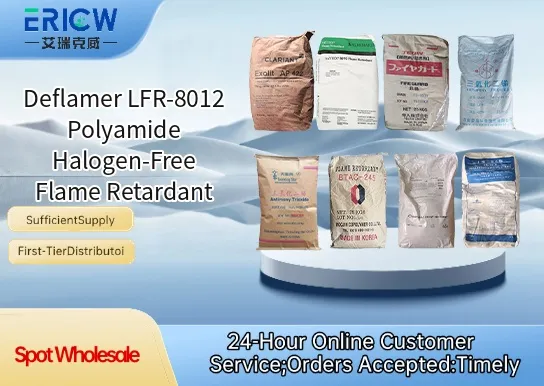
Halogen-free formulation ensures low smoke density and zero corrosive gas emission during combustion.
Excellent thermal stability compatible with polyamide processing temperatures up to 280 °C.
High flame retardancy efficiency achieving UL94 V-0 rating at 1.5 mm thickness in PA6 and PA66.
Good compatibility and dispersion in polyamide matrices without compromising mechanical properties.
RoHS-compliant and REACH-registered, supporting sustainable electronics and automotive material requirements.
Electrical connectors and housings for consumer electronics.
Automotive under-hood components including sensor housings and fuse boxes.
Industrial automation parts requiring high flame resistance and dimensional stability.
Power tool housings and motor end caps exposed to elevated operating temperatures.
LED lighting reflectors and heat sinks demanding low-smoke, halogen-free performance.
| Chemical Type | Phosphorus-nitrogen synergistic intumescent system |
| Product Form | Free-flowing granules |
| Appearance | Off-white to light beige granules |
| Primary Applications | Polyamide 6 (PA6), Polyamide 66 (PA66) |
| Key Features | Halogen-free, UL94 V-0 rated, RoHS/REACH compliant |
| Recommended Loading Level | 12–15 wt% in PA6/PA66 |
| Density | 1.55–1.65 g/cm³ |
| Storage Conditions | Store in dry, cool conditions (<25 °C); keep sealed to prevent moisture absorption |
Q1: What polyamide grades is Deflamer LFR-8012 compatible with?
A: Deflamer LFR-8012 is specifically engineered for use in PA6 and PA66 homopolymers and copolymers, including both unfilled and glass-fiber reinforced systems. Compatibility with PA12 or high-temperature polyamides may require formulation evaluation.
Q2: How does LFR-8012 achieve flame retardancy without halogenated compounds?
A: It functions primarily through a condensed-phase mechanism—promoting char formation on the polymer surface during thermal decomposition—which acts as a physical barrier to heat and mass transfer. Its synergistic formulation enhances thermal stability without releasing corrosive or toxic halogenated gases.
Q3: Can LFR-8012 be used in injection-molded thin-wall components requiring UL94 V-0 rating?
A: Yes—when properly compounded and processed, LFR-8012 enables polyamide formulations to achieve UL94 V-0 at thicknesses down to 0.8 mm, provided the base resin, filler system, and processing conditions support optimal dispersion and char integrity.
Q4: Does LFR-8012 affect the mechanical properties of polyamide compounds?
A: When optimally dispersed, it typically preserves tensile strength and impact resistance better than many conventional halogen-free alternatives. Some reduction in elongation at break may occur at higher loadings, but this is generally offset by maintaining good processability and long-term thermal aging performance.
Contact With Us:
E-mail: wangxingqiang@ericwchem.com
Have a Questions? Call Us:
Add:
Building A1, Jiete Industrial Park, Huangpu District, Guangzhou City, Guangdong Province, China