English
 Español
 tiếng việt
 русский
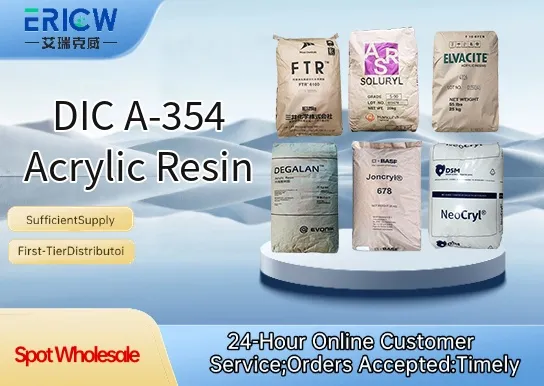
High-gloss, durable film formation with excellent clarity and color retention.
Good compatibility with common solvent-based coating systems including nitrocellulose and alkyd resins.
Optimized molecular weight distribution for balanced viscosity control and sprayability.
Excellent UV resistance and weatherability for long-term outdoor performance.
Low VOC formulation suitable for compliance with stringent environmental regulations.
Automotive refinish topcoats and clearcoats.
Industrial maintenance coatings for metal and plastic substrates.
General-purpose decorative solventborne architectural coatings.
Can and coil coating formulations requiring high gloss and hardness.
Specialty printing inks requiring transparency and substrate adhesion.
| Chemical Type | Solvent-borne acrylic copolymer |
| Product Form | Liquid resin solution |
| Appearance | Clear, pale yellow to colorless liquid |
| Solvent System | Xylene / butyl acetate blend |
| Non-Volatile Content (wt%) | 45–48% |
| Acid Value (mg KOH/g) | 3–6 |
| Viscosity (25°C, mPa·s) | 80–120 (at 45% NV in xylene/butyl acetate) |
| Primary Applications | High-performance topcoats, clearcoats, industrial finishes |
Q1: What is the primary function of DIC A-354 Acrylic Resin in coating and ink formulations?
A: DIC A-354 is a solution-grade acrylic resin designed primarily as a binder and rheology modifier, contributing to film formation, gloss control, and pigment dispersion stability in solvent-based and high-solids industrial coatings and gravure/flexographic inks.
Q2: Is DIC A-354 compatible with common crosslinkers used in thermosetting systems?
A: Yes — DIC A-354 contains hydroxyl functionality and is formulated to be compatible with standard amino resins (e.g., melamine-formaldehyde) and polyisocyanates, enabling its use in baked or ambient-cure two-component systems where enhanced hardness and chemical resistance are required.
Q3: How should DIC A-354 be incorporated into a formulation to ensure optimal performance?
A: It is typically added during the let-down or post-addition stage under moderate agitation. To preserve molecular integrity and avoid premature viscosity increase, avoid prolonged high-shear mixing or exposure to strong acids/bases prior to full incorporation. Solvent selection should align with its recommended solubility profile (e.g., aromatic hydrocarbons, esters, ketones).
Q4: Can DIC A-354 be used in food-contact compliant coatings?
A: DIC A-354 is not pre-certified for direct food contact applications. Its suitability depends on final formulation composition, curing conditions, and regulatory evaluation by the end-user. Customers intending food-contact use must conduct full migration and compliance testing per applicable regional requirements.
Contact With Us:
E-mail: wangxingqiang@ericwchem.com
Have a Questions? Call Us:
Add:
Building A1, Jiete Industrial Park, Huangpu District, Guangzhou City, Guangdong Province, China