English
 Español
 tiếng việt
 русский
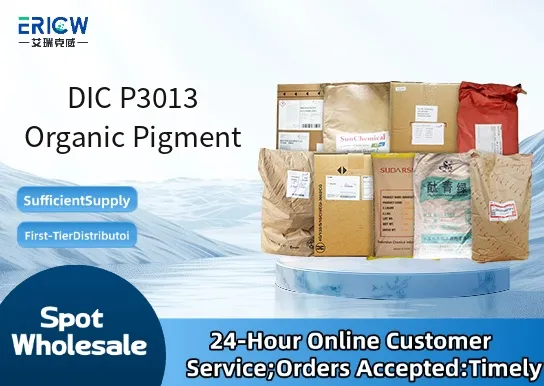
High chroma and excellent color strength for vibrant, consistent hue reproduction.
Outstanding thermal stability up to 240 °C, suitable for high-temperature processing.
Good lightfastness (ASTM Level 7–8) and weather resistance in demanding outdoor applications.
Excellent dispersibility in both polar and non-polar polymer matrices including PVC, PS, and ABS.
Low volatility and minimal migration, ensuring long-term color integrity in food-contact-compliant formulations.
Automotive interior and exterior plastic components (dashboards, trim, bumpers).
Engineering plastics for consumer electronics housings and connectors.
High-performance masterbatches for injection-molded industrial parts.
Food-grade packaging films and rigid containers compliant with FDA 21 CFR §178.3297.
Architectural coatings requiring UV resistance and color retention.
| Chemical Type | Quinacridone derivative |
| Product Form | Free-flowing fine powder |
| Appearance | Reddish-violet crystalline powder |
| Primary Applications | Plastics, masterbatches, high-performance coatings |
| Key Features | Thermally stable, low migration, high tinctorial strength |
| Benefits | Consistent batch-to-batch color, reduced dosage requirements, broad polymer compatibility |
| Regulatory Compliance | REACH registered; compliant with EU Directive 2002/72/EC for plastics in contact with food |
| Storage Conditions | Store in cool, dry place below 30 °C; protect from moisture and direct sunlight |
Q1: What is the primary chemical class and typical hue profile of DIC P3013?
A: DIC P3013 is a high-performance perylene-based organic pigment, offering strong reddish-violet to maroon shades with excellent chroma and clean undertones. Its molecular structure contributes to superior lightfastness and thermal stability compared to many conventional azo pigments.
Q2: Is DIC P3013 suitable for use in food-contact plastics or packaging applications?
A: DIC P3013 is not pre-approved for direct food-contact applications under major global regulatory frameworks. It may be considered for indirect contact or non-migrating systems where pigment incorporation and dispersion conditions ensure negligible extractability — however, end-use compliance must be validated by the compounder or converter per applicable regional requirements.
Q3: How does DIC P3013 perform under high-temperature processing conditions?
A: This pigment demonstrates good thermal stability and is routinely processed in engineering thermoplastics such as polyesters and polyamides at temperatures up to approximately 280–300 °C, provided residence time is controlled. Extended exposure above 300 °C may lead to gradual color shift or reduced tinctorial strength.
Q4: What are recommended dispersion methods for optimal color development in polymer systems?
A: For best results, DIC P3013 should be pre-dispersed using high-shear compounding techniques—such as twin-screw extrusion with optimized screw design and temperature profiling. Dry blending prior to extrusion is acceptable, but masterbatch dilution is preferred to ensure uniform distribution and maximize color strength and gloss.
Q5: Can DIC P3013 be used alongside common inorganic pigments or effect pigments in multi-pigment formulations?
A: Yes, DIC P3013 exhibits good compatibility with many inorganic pigments (e.g., titanium dioxide, iron oxides) and metallic effect pigments when properly dispersed. However, formulation trials are recommended to assess potential interactions affecting hue stability, flocculation behavior, or rheology—especially in solvent-borne or high-solids coatings.
Contact With Us:
E-mail: wangxingqiang@ericwchem.com
Have a Questions? Call Us:
Add:
Building A1, Jiete Industrial Park, Huangpu District, Guangzhou City, Guangdong Province, China