English
 Español
 tiếng việt
 русский
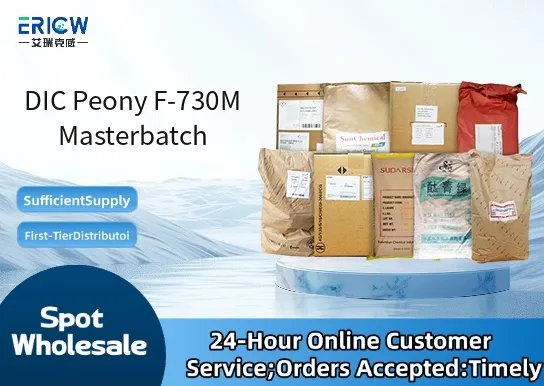
Highly concentrated pigment dispersion for excellent color consistency and batch-to-batch reproducibility.
Optimized for polyolefin (PP/PE) processing with superior thermal stability up to 280°C.
Low migration and blooming resistance, ensuring long-term color integrity in demanding applications.
Free-flowing granular form with uniform particle size distribution for smooth feeding and metering.
Compliant with FDA 21 CFR §178.3297 and EU Regulation (EC) No. 10/2011 for food-contact plastics.
Food packaging films and containers requiring regulatory compliance and high clarity.
Automotive interior trim components exposed to UV and elevated temperatures.
Household appliances housings where colorfastness and surface gloss retention are critical.
Medical device packaging made from sterilizable polypropylene.
Consumer electronics enclosures requiring precise color matching and low outgassing.
| Chemical Type | Organic pigment-based masterbatch |
| Product Form | Free-flowing granules |
| Appearance | Uniform colored granules, no dust or agglomerates |
| Base Polymer | Polypropylene (PP) |
| Typical Pigment Concentration | 25–30 wt% |
| Melt Flow Index (190°C/2.16 kg) | 25–35 g/10 min |
| Density | 0.92–0.95 g/cm³ |
| Moisture Content | <0.2 wt% (as received) |
Q1: What is the primary function of DIC Peony F-730M Masterbatch in polyolefin applications?
A: DIC Peony F-730M is a high-performance nucleating masterbatch designed to enhance crystallization kinetics, improve stiffness, and increase heat deflection temperature in polypropylene and other polyolefin-based systems. It supports faster cycle times and improved dimensional stability without compromising impact performance.
Q2: Which polymer matrices is F-730M compatible with?
A: F-730M is specifically formulated for use in homopolymer and copolymer polypropylene, as well as certain polyethylene blends. It demonstrates good dispersion and compatibility in both injection-molded and extruded PP profiles, but is not recommended for amorphous polymers such as PS or PC without prior compatibility testing.
Q3: How should F-730M be incorporated into the production process?
A: F-730M is typically added via gravimetric or volumetric dosing directly into the feed throat of an extruder or injection molding machine. It is fully dispersible under standard processing conditions and does not require pre-drying. For optimal results, ensure uniform mixing at temperatures within the typical PP processing range (180–240 °C).
Q4: Does F-730M affect the color or transparency of the final part?
A: F-730M is engineered to maintain excellent clarity and minimal haze in transparent PP applications. It does not introduce yellowing or discoloration when used at recommended dosage levels, making it suitable for packaging and medical-grade components where optical properties are critical.
Q5: What is the typical dosage range for effective nucleation with F-730M?
A: Effective nucleation is generally achieved at low concentrations — typically ranging from 0.1% to 2% by weight relative to the base polymer — depending on the desired balance of mechanical properties, processing speed, and end-use requirements. Optimization trials are recommended for each specific formulation and equipment setup.
Contact With Us:
E-mail: wangxingqiang@ericwchem.com
Have a Questions? Call Us:
Add:
Building A1, Jiete Industrial Park, Huangpu District, Guangzhou City, Guangdong Province, China