English
 Español
 tiếng việt
 русский
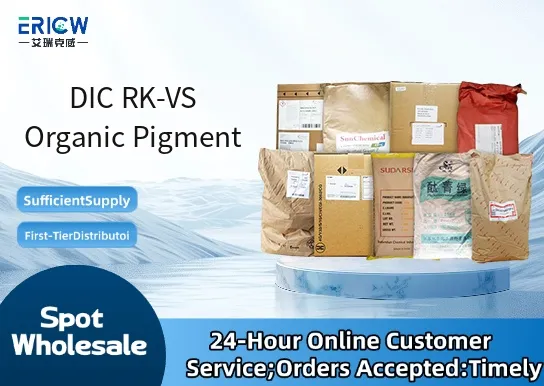
High chromatic strength with excellent color purity in red-violet shade.
Outstanding thermal stability up to 220°C, suitable for high-temperature processing.
Good lightfastness (ISO 105-B02: Grade 7–8) and weather resistance.
Low migration tendency in PVC, polyolefins, and styrenic polymers.
Free from heavy metals and compliant with major global regulatory frameworks (REACH, RoHS).
Automotive interior plastics (dashboards, trim components).
Engineering thermoplastics including ABS, PS, and PC blends.
PVC profiles and flexible vinyl applications (cable sheathing, flooring).
Masterbatch formulations for color concentrate production.
High-performance industrial coatings requiring durable red-violet hue.
| Chemical Type | Quinacridone derivative |
| Product Form | Free-flowing powder |
| Appearance | Red-violet fine powder |
| Primary Applications | Plastics, masterbatches, coatings |
| Key Features | Thermal stability, low migration, high dispersibility |
| Benefits | Consistent batch-to-batch color, ease of incorporation, minimal filter clogging |
| Regulatory Compliance | REACH registered, RoHS compliant, non-GMO |
| Recommended Processing Temperature Range | 160–220°C |
Q1: What are the primary application areas for DIC RK-VS Organic Pigment?
A: DIC RK-VS is engineered for high-performance organic pigment applications in engineering thermoplastics, particularly polyamide (PA6, PA66) and polyphenylene sulfide (PPS), where thermal stability, color consistency, and dispersion integrity are critical during melt processing.
Q2: How does RK-VS compare to conventional organic pigments in terms of thermal stability?
A: RK-VS exhibits enhanced thermal resistance compared to standard azo or quinacridone-based pigments, maintaining color strength and hue integrity under prolonged exposure to temperatures commonly encountered in high-heat polymer processing (e.g., above 280 °C for short residence times).
Q3: Is RK-VS suitable for food-contact plastic applications?
A: RK-VS is not pre-approved for direct food-contact use. Its suitability depends on final formulation compliance with applicable regional regulations; users must conduct full regulatory evaluation—including extractables testing—within their specific matrix and processing conditions.
Q4: What is the typical dosage range when incorporating RK-VS into engineering plastics?
A: Dosage is formulation-dependent but generally ranges from 0.1% to 2% by weight, optimized based on desired chroma, opacity requirements, and polymer compatibility—lower concentrations often suffice due to its high tinctorial strength and efficient dispersion behavior.
Q5: Does RK-VS require special handling or pre-treatment before compounding?
A: RK-VS is supplied as a free-flowing, dry powder designed for direct incorporation into masterbatch or compound formulations. No pre-drying or surface treatment is required under standard storage conditions; however, minimizing moisture uptake prior to high-temperature processing is recommended.
Contact With Us:
E-mail: wangxingqiang@ericwchem.com
Have a Questions? Call Us:
Add:
Building A1, Jiete Industrial Park, Huangpu District, Guangzhou City, Guangdong Province, China