English
 Español
 tiếng việt
 русский
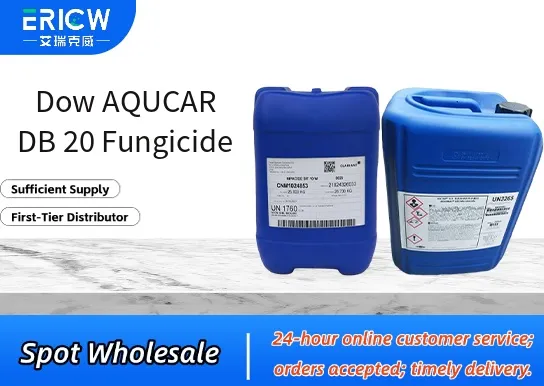
Broad-spectrum fungicidal activity against key oomycete and ascomycete pathogens.
Systemic and protective action with translaminar movement for extended residual control.
Low-use-rate formulation enabling efficient application and reduced environmental load.
Compatible with integrated pest management (IPM) programs and many common agrochemicals.
Stable under standard storage conditions and suitable for tank-mixing with selected fertilizers and adjuvants.
Vineyards — control of downy mildew (Plasmopara viticola) on grapevines.
Fruit orchards — management of scab (Venturia spp.) and brown rot (Monilinia spp.) in apples and stone fruits.
Vegetable production — suppression of late blight (Phytophthora infestans) in tomatoes and potatoes.
Greenhouse ornamentals — prevention of powdery mildew (Podosphaera, Erysiphe spp.) on bedding plants and cut flowers.
| Chemical Type | Strobilurin-class fungicide (active ingredient: Trifloxystrobin) |
| Product Form | Flowable suspension (FS) |
| Appearance | Off-white to light tan suspension |
| Active Ingredient Concentration | 200 g/L Trifloxystrobin |
| pH Range (1% aqueous solution) | 6.0 – 8.0 |
| Density (20°C) | 1.15 – 1.25 g/cm³ |
| Storage Stability | ≥ 24 months at 5–30°C in original unopened container |
| Primary Mode of Action | QoI inhibitor (FRAC Group 11) |
Q1: What types of formulations is Dow AQUCAR DB 20 Fungicide typically used in?
A: Dow AQUCAR DB 20 Fungicide is designed for use in water-based industrial formulations, including coatings, adhesives, construction materials, and water treatment systems where long-term microbial control is required.
Q2: How does AQUCAR DB 20 provide protection against fungi and bacteria?
A: It functions as a broad-spectrum biocide with activity against common spoilage microorganisms, including mold, yeast, and Gram-positive and Gram-negative bacteria, through disruption of essential cellular processes.
Q3: Is AQUCAR DB 20 compatible with common formulation ingredients?
A: Yes — it demonstrates good compatibility with many anionic, nonionic, and amphoteric surfactants, thickeners, and common co-biocides, though compatibility testing under actual formulation conditions is recommended prior to full-scale use.
Q4: What is the typical dosage range for effective preservation?
A: Dosage depends on formulation composition, pH, temperature, and microbial challenge level, but it is generally used at low concentrations — typically ranging from 0.1% to 2% by weight of the final product.
Q5: Does AQUCAR DB 20 require special handling or storage conditions?
A: It should be stored in its original sealed container at moderate temperatures, away from direct sunlight and strong oxidizing agents; standard industrial chemical handling precautions apply, including appropriate PPE during handling.
Contact With Us:
E-mail: wangxingqiang@ericwchem.com
Have a Questions? Call Us:
Add:
Building A1, Jiete Industrial Park, Huangpu District, Guangzhou City, Guangdong Province, China