English
 Español
 tiếng việt
 русский
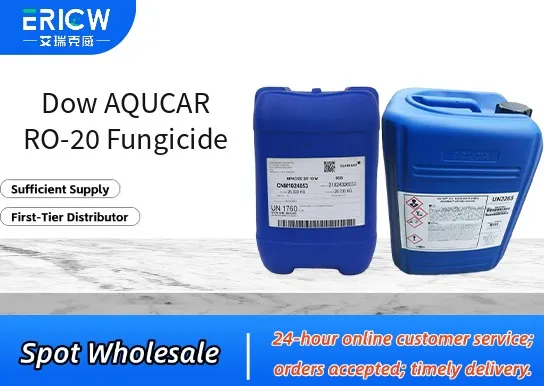
Broad-spectrum activity against key fungal pathogens including Aspergillus, Penicillium, and Cladosporium species.
Non-volatile formulation with low odor profile, enhancing workplace safety and operator comfort.
Stable across a wide pH range (4–10), ensuring compatibility with common industrial water treatment systems.
Low aquatic toxicity profile, supporting environmentally responsible usage in regulated industrial settings.
Effective at low dosage rates (50–200 ppm), delivering cost-efficient microbial control without compromising performance.
Industrial recirculating cooling water systems.
Reverse osmosis (RO) membrane pretreatment and system maintenance.
Process water loops in food & beverage manufacturing facilities.
Water-based metalworking fluid systems.
Humidification and HVAC condensate management systems.
| Chemical Type | Isothiazolinone-based biocide blend |
| Product Form | Aqueous liquid solution |
| Appearance | Clear to slightly hazy, pale yellow liquid |
| pH (as supplied) | 3.0–4.5 |
| Density (20°C) | 1.02–1.06 g/cm³ |
| Solubility | Completely miscible in water |
| Primary Applications | Microbial control in industrial water systems |
| Key Features | Non-oxidizing, non-corrosive, RO-membrane compatible |
Q1: What is the primary mode of action of Dow AQUCAR RO-20 Fungicide?
A: Dow AQUCAR RO-20 Fungicide functions as a broad-spectrum, contact and preventive fungicide. It inhibits fungal growth by disrupting cell membrane integrity and interfering with essential metabolic processes in susceptible organisms.
Q2: In which types of industrial water systems is AQUCAR RO-20 typically applied?
A: It is commonly used in recirculating cooling water systems, reverse osmosis (RO) pretreatment streams, and other closed-loop industrial water applications where microbial fouling—particularly biofilm formation by fungi and yeasts—poses a risk to system performance and membrane integrity.
Q3: How does AQUCAR RO-20 compare to oxidizing biocides in terms of compatibility with RO membranes?
A: Unlike strong oxidizers such as chlorine or ozone, AQUCAR RO-20 is a non-oxidizing fungicide, making it inherently more compatible with polyamide-based RO membranes. It avoids oxidative degradation pathways that can compromise membrane lifespan and flux performance.
Q4: What factors influence the recommended dosage rate for AQUCAR RO-20 in a cooling water system?
A: Dosage depends on system-specific conditions including microbial load, water temperature, pH, organic content, and the presence of other treatment chemicals. It is generally applied at low concentrations in intermittent or continuous feed regimes, with optimization guided by routine microbiological monitoring and system performance data.
Q5: Is AQUCAR RO-20 suitable for use in combination with other common water treatment additives?
A: Yes, AQUCAR RO-20 demonstrates good compatibility with many scale inhibitors, corrosion inhibitors, and dispersants used in industrial water treatment programs. However, compatibility testing under actual system conditions is recommended prior to full-scale implementation to ensure formulation stability and efficacy.
Contact With Us:
E-mail: wangxingqiang@ericwchem.com
Have a Questions? Call Us:
Add:
Building A1, Jiete Industrial Park, Huangpu District, Guangzhou City, Guangdong Province, China