English
 Español
 tiếng việt
 русский
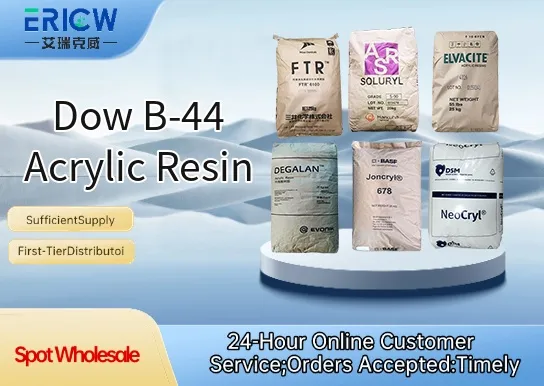
High solids content for reduced VOC emissions and improved coating efficiency.
Excellent UV resistance and long-term color stability in exterior applications.
Good compatibility with common crosslinkers including melamine and polyisocyanates.
Low viscosity enables easy formulation and high-solids spray application.
Strong adhesion to diverse substrates including metal, plastic, and primed wood.
Automotive refinish clearcoats and basecoats.
Industrial maintenance coatings for machinery and equipment.
Architectural metal cladding and facade coatings.
Plastic coatings for automotive interior trim and consumer electronics.
General-purpose high-performance protective topcoats.
| Chemical Type | Acrylic copolymer resin |
| Product Form | Liquid solution (solvent-based) |
| Appearance | Clear, pale yellow liquid |
| Solvent System | Aromatic hydrocarbons and esters |
| Solids Content (wt%) | 50–55% |
| Acid Value (mg KOH/g) | 8–12 |
| Viscosity (mPa·s, 25°C) | 800–1,200 |
| Primary Applications | High-performance thermoset coatings |
Q1: What is the primary function of Dow B-44 Acrylic Resin in coating formulations?
A: Dow B-44 Acrylic Resin functions primarily as a rheology modifier and matting agent, helping to control viscosity, improve sag resistance, and deliver uniform, low-sheen finishes in architectural and industrial coatings.
Q2: Is Dow B-44 compatible with waterborne systems?
A: Yes, Dow B-44 is specifically designed for compatibility with waterborne acrylic and hybrid emulsion systems, including those based on styrene-acrylic, vinyl acetate copolymers, and other common latex binders.
Q3: How is Dow B-44 typically incorporated into a formulation?
A: It is generally added during the let-down stage, either pre-dispersed in water or directly into the aqueous phase under moderate agitation. Avoid high-shear dispersion to preserve particle integrity and performance consistency.
Q4: Does Dow B-44 contribute to film formation or binder functionality?
A: No — Dow B-44 is a non-film-forming additive. It remains as discrete particles within the dried film, providing texture and optical effects without participating in coalescence or altering the fundamental mechanical properties of the binder system.
Contact With Us:
E-mail: wangxingqiang@ericwchem.com
Have a Questions? Call Us:
Add:
Building A1, Jiete Industrial Park, Huangpu District, Guangzhou City, Guangdong Province, China