English
 Español
 tiếng việt
 русский
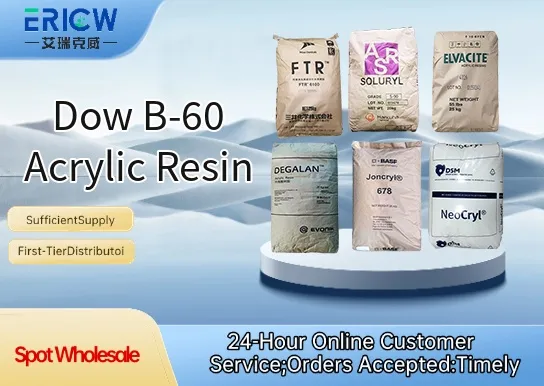
High gloss and excellent clarity for premium aesthetic performance.
Outstanding UV resistance and long-term color stability in outdoor exposure.
Good compatibility with common solvent-based coating systems and crosslinkers.
Low VOC formulation support—designed for compliance with stringent environmental regulations.
Consistent batch-to-batch reproducibility and robust processing behavior in industrial coating lines.
Automotive clearcoats and OEM topcoats.
Industrial maintenance coatings for metal and plastic substrates.
Architectural high-performance façade coatings.
Coil coatings requiring weatherability and film integrity.
General-purpose protective and decorative solventborne finishes.
| Chemical Type | Solventborne acrylic copolymer |
| Product Form | Liquid resin solution |
| Appearance | Clear, pale yellow to colorless liquid |
| Solvent System | Aromatic hydrocarbon–based (e.g., xylene, Solvesso™) |
| Non-Volatile Content (wt%) | 50 ± 2% |
| Acid Value (mg KOH/g) | 8–12 |
| Viscosity (mPa·s, 25°C, Brookfield RVT, #3 spindle, 20 rpm) | 1,200–1,800 |
| Primary Applications | High-gloss automotive and industrial topcoats |
Q1: What is the primary function of Dow B-60 Acrylic Resin in coating formulations?
A: Dow B-60 Acrylic Resin functions primarily as a rheology modifier and film-forming aid, helping to improve viscosity control, sag resistance, and leveling performance in waterborne architectural and industrial coatings.
Q2: Is Dow B-60 compatible with common waterborne acrylic and vinyl acetate-based emulsions?
A: Yes, Dow B-60 is designed for broad compatibility with typical anionic and nonionic waterborne polymer dispersions, including acrylic, styrene-acrylic, and vinyl acetate copolymer systems, without inducing coagulation or viscosity instability.
Q3: How should Dow B-60 be incorporated into a formulation to ensure optimal performance?
A: It is recommended to add Dow B-60 during the let-down stage, after the main binder and pigments have been dispersed. Pre-dilution with water or co-solvent may facilitate uniform incorporation, and gentle mixing is advised to avoid air entrapment.
Q4: Does Dow B-60 contribute to final film properties such as gloss or scrub resistance?
A: While not a primary film former, Dow B-60 supports improved film continuity and surface uniformity, which can positively influence gloss development and enhance mechanical durability—including scrub and abrasion resistance—in cured coatings.
Contact With Us:
E-mail: wangxingqiang@ericwchem.com
Have a Questions? Call Us:
Add:
Building A1, Jiete Industrial Park, Huangpu District, Guangzhou City, Guangdong Province, China