English
 Español
 tiếng việt
 русский
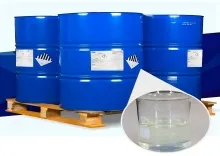
High-gloss, durable film formation for superior surface aesthetics.
Excellent UV resistance and long-term color stability in outdoor exposure.
Good compatibility with common crosslinkers including melamine and polyisocyanates.
Low viscosity solution enabling easy handling and high-solids formulation flexibility.
Consistent batch-to-batch performance supported by Dow’s rigorous quality control.
Automotive OEM clearcoats and topcoats.
Industrial maintenance coatings for metal substrates.
General-purpose high-performance architectural coatings.
Plastic coatings requiring mar resistance and clarity.
Coil coating primers and topcoats for pre-painted metal.
| Chemical Type | Thermosetting acrylic copolymer |
| Product Form | Clear liquid solution in aromatic hydrocarbon solvent |
| Appearance | Water-white to pale yellow, transparent liquid |
| Non-Volatile Content (wt%) | 50.0 ± 1.5% |
| Acid Number (mg KOH/g) | 8–12 |
| Gardner Color | ≤ 3 |
| Viscosity (DIN 4mm, 25°C) | 25–35 s |
| Primary Applications | High-performance automotive and industrial coatings |
Q1: What is the primary function of Dow B-64 Acrylic Resin in coating formulations?
A: Dow B-64 is a water-based acrylic copolymer designed primarily as a rheology modifier and film-forming aid. It enhances viscosity control, improves pigment suspension stability, and contributes to cohesive film development in architectural and industrial waterborne coatings.
Q2: Is Dow B-64 compatible with common co-binders and additives used in waterborne systems?
A: Yes, Dow B-64 exhibits broad compatibility with typical waterborne resins—including styrene-acrylics, vinyl acetate copolymers, and polyurethane dispersions—as well as common surfactants, defoamers, and biocides. Compatibility testing under actual formulation conditions is recommended to confirm performance stability.
Q3: How does Dow B-64 affect drying time and final film properties?
A: As a non-film-forming rheology modifier, Dow B-64 supports rapid viscosity recovery after shear, which helps maintain application properties without significantly delaying dry-through. It generally contributes to improved scrub resistance and reduced water sensitivity in the cured film, though final performance depends on overall formulation balance.
Q4: What is the typical dosage range for Dow B-64 in standard waterborne paint formulations?
A: Dow B-64 is typically used at low concentrations—generally ranging from 0.1% to 2% by weight of the total formulation—depending on the desired rheological profile, pigment loading, and end-use performance requirements. Optimal dosage should be determined through lab-scale evaluation and shear-stability testing.
Contact With Us:
E-mail: wangxingqiang@ericwchem.com
Have a Questions? Call Us:
Add:
Building A1, Jiete Industrial Park, Huangpu District, Guangzhou City, Guangdong Province, China