English
 Español
 tiếng việt
 русский
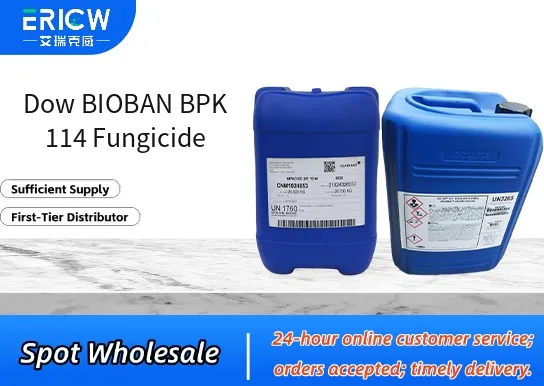
Broad-spectrum fungicidal activity against Aspergillus, Penicillium, Cladosporium, and other common spoilage fungi.
Low volatility and excellent stability in water-based formulations across a wide pH range (pH 4–9).
Non-volatile active ingredient ensures long-term protection without significant loss during drying or storage.
Compatible with a wide range of polymers, surfactants, and co-biocide systems used in industrial formulations.
Designed for non-leaching performance in coatings, adhesives, and sealants to maintain efficacy over product lifetime.
Interior and exterior architectural coatings, including latex paints and primers.
Water-based adhesives and construction sealants.
Textile and nonwoven fabric treatments for mold resistance.
Industrial maintenance coatings for HVAC systems and moisture-prone surfaces.
Cellulose-based products such as wallpaper pastes and paper coatings.
| Chemical Type | Isothiazolinone-based biocide (active: 1,2-benzisothiazol-3(2H)-one) |
| Product Form | Liquid concentrate |
| Appearance | Clear to slightly hazy, pale yellow liquid |
| pH (1% aqueous solution) | 5.0 – 7.0 |
| Density (25°C) | 1.08 – 1.12 g/cm³ |
| Solubility | Miscible with water and common polar organic solvents |
| Primary Applications | Fungal control in water-based industrial formulations |
| Key Features | Non-volatile, low-odor, polymer-compatible, broad-spectrum antifungal |
Q1: What is the primary mode of action of Dow BIOBAN BPK 114?
A: Dow BIOBAN BPK 114 functions as a broad-spectrum fungistatic and bacteriostatic agent, primarily inhibiting microbial cell metabolism and growth through interference with essential enzymatic processes. Its efficacy is sustained in aqueous systems where long-term protection against spoilage organisms is required.
Q2: In which types of industrial formulations is Dow BIOBAN BPK 114 commonly used?
A: It is widely incorporated into water-based industrial products such as metalworking fluids, latex paints, adhesives, construction chemicals, and cleaning concentrates—particularly where extended shelf life and resistance to microbial degradation during storage and use are critical.
Q3: How does pH affect the performance and stability of Dow BIOBAN BPK 114?
A: Dow BIOBAN BPK 114 demonstrates optimal stability and antimicrobial activity in mildly acidic to neutral pH ranges (approximately pH 4–8). Performance may diminish under strongly alkaline conditions due to potential hydrolysis or reduced solubility.
Q4: Is Dow BIOBAN BPK 114 compatible with common surfactants and thickeners used in industrial formulations?
A: Yes, it generally exhibits good compatibility with nonionic and anionic surfactants, as well as common rheology modifiers including cellulose ethers and associative thickeners. Compatibility should be verified empirically for specific formulation matrices, especially when high electrolyte content or extreme shear conditions are present.
Q5: What safety and handling considerations apply during industrial-scale incorporation?
A: As with all biocidal actives, appropriate personal protective equipment (PPE) such as gloves and eye protection is recommended during handling. The product should be added under controlled conditions—typically during the cool-down phase of formulation—to minimize thermal degradation and ensure uniform dispersion.
Contact With Us:
E-mail: wangxingqiang@ericwchem.com
Have a Questions? Call Us:
Add:
Building A1, Jiete Industrial Park, Huangpu District, Guangzhou City, Guangdong Province, China