English
 Español
 tiếng việt
 русский
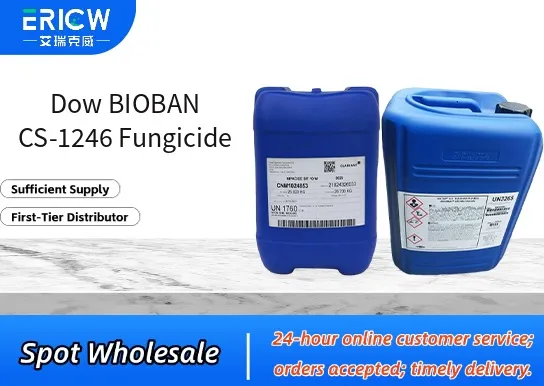
Broad-spectrum fungicidal activity against Aspergillus, Penicillium, Cladosporium, and other common spoilage fungi.
Non-volatile, non-leaching formulation ensures long-term protection in water-based systems.
Compatible with a wide range of industrial polymers, coatings, and adhesives without compromising performance.
Low odor and low volatility support safe handling in enclosed manufacturing environments.
Stable across pH 4–10 and tolerant to moderate heat exposure during processing.
Latex paints and architectural coatings.
Water-based adhesives and sealants.
Textile and leather finishing formulations.
Construction materials including gypsum board joint compounds and cementitious slurries.
Industrial cleaning and maintenance concentrates.
| Chemical Type | Isothiazolinone-based biocide (active ingredient: 4,5-dichloro-2-n-octyl-3(2H)-isothiazolone) |
| Product Form | Liquid concentrate |
| Appearance | Clear, light yellow to amber liquid |
| Primary Applications | Preservative for water-based industrial products |
| Key Features | Non-oxidizing, non-corrosive, low VOC |
| Benefits | Extended shelf life, compatibility with anionic and nonionic surfactants |
| pH Range (as supplied) | 7.0 – 9.0 |
| Storage Temperature | 5–35 °C (recommended) |
Q1: What is the primary mode of action of Dow BIOBAN CS-1246?
A: Dow BIOBAN CS-1246 is a broad-spectrum fungicide that functions primarily through inhibition of fungal cell membrane synthesis and disruption of cellular metabolism, providing effective control against common spoilage fungi and yeasts in industrial formulations.
Q2: In which types of industrial products is Dow BIOBAN CS-1246 typically used?
A: It is commonly incorporated into water-based industrial formulations such as metalworking fluids, latex paints, adhesives, construction chemicals, and cleaning concentrates—where protection against microbial degradation during storage and use is critical.
Q3: How stable is Dow BIOBAN CS-1246 under varying pH and temperature conditions?
A: The active ingredient demonstrates good stability across a typical industrial pH range of 6–9 and maintains efficacy under standard storage and processing temperatures. Performance may diminish under strongly alkaline conditions or prolonged exposure to elevated temperatures above 60 °C.
Q4: Is Dow BIOBAN CS-1246 compatible with common biocides and formulation additives?
A: Yes, it generally exhibits good compatibility with many oxidative and non-oxidative biocides, thickeners, surfactants, and corrosion inhibitors used in industrial systems—though compatibility testing under actual formulation conditions is recommended prior to full-scale implementation.
Q5: What is the typical dosage range for effective fungal control?
A: Dosage depends on formulation requirements, challenge level, and regulatory considerations, but it is typically used at low concentrations—generally ranging from 0.1% to 2% by weight of the final product—to achieve robust antifungal performance without compromising system stability.
Contact With Us:
E-mail: wangxingqiang@ericwchem.com
Have a Questions? Call Us:
Add:
Building A1, Jiete Industrial Park, Huangpu District, Guangzhou City, Guangdong Province, China