English
 Español
 tiếng việt
 русский
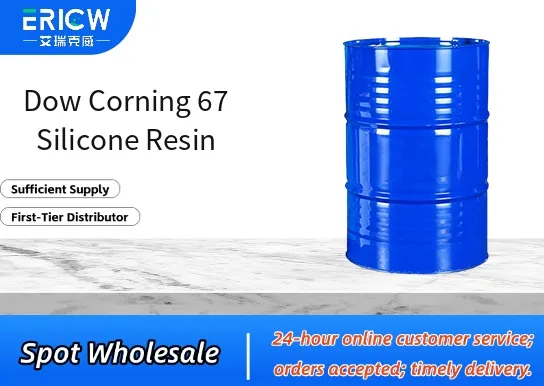
High thermal stability with continuous service up to 200 °C.
Excellent electrical insulation properties across wide temperature and frequency ranges.
Good adhesion to metals, ceramics, and cured silicone elastomers.
Solvent-based formulation (xylene/toluene blend) enabling easy processing and film formation.
Forms durable, flexible, and hydrophobic protective coatings upon solvent evaporation.
Insulating coatings for electrical windings and transformers.
Protective topcoats for high-temperature gaskets and seals.
Matrix resin in composite materials for aerospace and automotive components.
Binders for silicone rubber powders and refractory fillers.
Surface treatment for improving moisture resistance of electronic assemblies.
| Chemical Type | Methyl-phenyl silicone resin |
| Product Form | Liquid solution |
| Appearance | Clear, colorless to pale yellow liquid |
| Solvent System | Xylene and toluene |
| Total Solids Content | 50–55 wt% |
| Viscosity (25 °C) | 100–300 cP |
| Specific Gravity (25 °C) | 0.92–0.96 |
| VOC Content | Approx. 45–50 wt% |
Q1: What is the primary function of Dow Corning 67 Silicone Resin in coatings and inks?
A: Dow Corning 67 Silicone Resin functions primarily as a surface modifier and release agent, enhancing slip, leveling, and substrate release properties while maintaining compatibility with organic resin systems.
Q2: Is Dow Corning 67 compatible with common solvent-based and UV-curable formulations?
A: Yes, it demonstrates good compatibility with a broad range of solvent-based, high-solids, and UV-curable systems, including acrylics, polyurethanes, and epoxies—though compatibility testing under actual formulation conditions is recommended.
Q3: How does Dow Corning 67 affect film formation and cure behavior in thermoset systems?
A: It generally does not interfere with crosslinking reactions and remains thermally stable during typical curing cycles; however, it may migrate to the film surface during cure to impart its functional benefits without compromising bulk integrity.
Q4: What are typical dosage levels for achieving optimal performance?
A: Dosage depends on the specific formulation and desired effect, but it is typically used at low concentrations—generally ranging from 0.1% to 2% by weight relative to total solids—to balance functionality with cost and compatibility.
Q5: Can Dow Corning 67 be used in food-contact or pharmaceutical packaging applications?
A: While Dow Corning 67 is not specifically designed or certified for direct food-contact applications, it may be considered for indirect contact uses where regulatory compliance is verified through full system evaluation and end-use testing.
Contact With Us:
E-mail: wangxingqiang@ericwchem.com
Have a Questions? Call Us:
Add:
Building A1, Jiete Industrial Park, Huangpu District, Guangzhou City, Guangdong Province, China