English
 Español
 tiếng việt
 русский
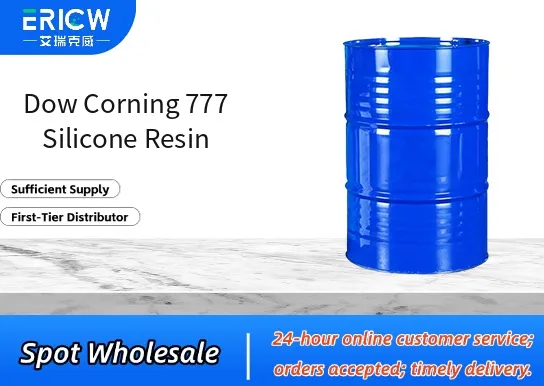
High thermal stability with continuous service capability up to 200 °C.
Excellent electrical insulation properties across wide temperature and frequency ranges.
Good compatibility with organic resins, enabling hybrid formulation flexibility.
Low surface energy and inherent hydrophobicity for moisture resistance.
Self-crosslinking capability under heat, eliminating need for external catalysts.
High-temperature insulating varnishes for motor windings and transformers.
Binders in silicone-based ceramic coatings for exhaust components and furnace linings.
Matrix resin in composite laminates requiring thermal and dielectric performance.
Additive for enhancing weatherability and thermal endurance of hybrid polymer systems.
Protective encapsulants for power electronics exposed to elevated operating temperatures.
| Chemical Type | Methyl-phenyl silicone resin |
| Product Form | Clear to light amber viscous liquid |
| Appearance | Homogeneous liquid, free of gel or sediment |
| Primary Applications | Electrical insulation, high-temperature coatings, hybrid composites |
| Key Features | Thermally stable, electrically insulating, self-crosslinking |
| Benefits | Extended service life at elevated temperatures, reduced formulation complexity |
| Storage Conditions | Store in tightly closed containers at 5–30 °C; avoid freezing |
| VOC Content | Low (<10 g/L) |
Q1: What is the primary function of Dow Corning 777 Silicone Resin in coating and ink formulations?
A: Dow Corning 777 is a methyl-phenyl silicone resin designed to enhance surface properties—particularly slip, mar resistance, and substrate wetting—without significantly affecting gloss or film integrity. It functions as a surface modifier that migrates to the air–film interface during cure or drying.
Q2: Is Dow Corning 777 compatible with common organic solvent-based systems?
A: Yes, it exhibits good compatibility with aromatic and aliphatic hydrocarbons, ketones, and esters. It can be readily dispersed or dissolved in typical industrial coating solvents, though compatibility should always be verified in the final formulation due to potential interactions with reactive resins or catalysts.
Q3: How does Dow Corning 777 differ from silicone oil additives in terms of performance and permanence?
A: Unlike low-molecular-weight silicone oils, Dow Corning 777 is a higher-molecular-weight, branched resin that offers improved anchoring within the cured film. This results in more durable surface effects and reduced tendency for bloom or transfer to contacting surfaces over time.
Q4: Can Dow Corning 777 be used in thermoset systems such as epoxy or polyurethane coatings?
A: Yes, it is commonly incorporated into thermosetting systems where it remains stable through typical cure cycles. Its phenyl content contributes to thermal stability and compatibility with many crosslinking chemistries, though reactivity screening is recommended for highly catalyzed or high-temperature-cure formulations.
Contact With Us:
E-mail: wangxingqiang@ericwchem.com
Have a Questions? Call Us:
Add:
Building A1, Jiete Industrial Park, Huangpu District, Guangzhou City, Guangdong Province, China