English
 Español
 tiếng việt
 русский
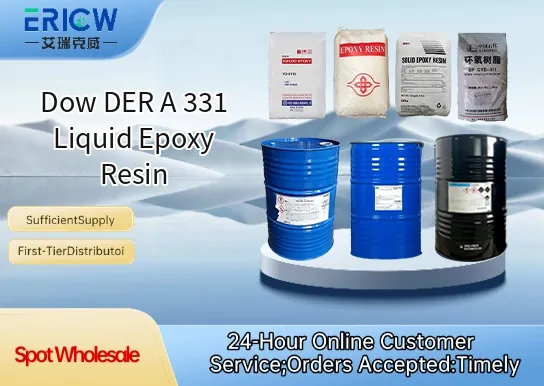
Low-viscosity, reactive liquid epoxy resin for enhanced processability and easy handling.
Excellent compatibility with common amine and anhydride curing agents.
High purity with low chlorine content, supporting reliable electrical insulation performance.
Good thermal stability and mechanical strength retention after cure.
Consistent batch-to-batch quality meeting stringent Dow manufacturing standards.
Electrical encapsulation and potting compounds for transformers and sensors.
High-voltage insulators and bushings requiring dielectric integrity.
Structural adhesives in aerospace and transportation composites.
Coatings and linings for corrosion-resistant industrial equipment.
Matrix resin for filament-wound pressure vessels and composite tooling.
| Chemical Type | Diglycidyl ether of bisphenol-A (DGEBA) |
| Product Form | Liquid |
| Appearance | Clear to pale yellow, transparent liquid |
| Epoxy Equivalent Weight (EEW) | 185–192 g/eq |
| Viscosity at 25°C | 12,000–16,000 cP |
| Chloride Content | ≤ 750 ppm |
| Volatiles Content | ≤ 0.3 wt% |
| Key Features | Low viscosity, high reactivity, excellent electrical properties |
Q1: What is the primary chemical structure and functionality of Dow DER A 331?
A: Dow DER A 331 is a liquid bisphenol-A based epoxy resin with an average epoxide functionality close to two per molecule. It features low molecular weight and low viscosity, enabling easy handling and good compatibility with common curing agents and modifiers.
Q2: Is Dow DER A 331 suitable for high-performance composite applications?
A: Yes — its low viscosity and well-balanced reactivity make it widely used in filament winding, pultrusion, and infusion processes for structural composites. It provides good mechanical properties and adhesion when cured with appropriate amine or anhydride hardeners.
Q3: How does Dow DER A 331 compare to solid epoxy resins in terms of processing?
A: Unlike solid epoxy resins, Dow DER A 331 requires no melting step and offers excellent flow characteristics at ambient temperature. This simplifies metering, mixing, and impregnation — especially in automated systems — and reduces energy consumption during formulation.
Q4: Can Dow DER A 331 be used in coatings requiring chemical resistance?
A: Yes — when properly cured, formulations based on Dow DER A 331 deliver robust resistance to alkalis, dilute acids, and solvents. Performance depends on the selected hardener and cure schedule, but it is commonly specified in industrial maintenance and tank lining coatings.
Contact With Us:
E-mail: wangxingqiang@ericwchem.com
Have a Questions? Call Us:
Add:
Building A1, Jiete Industrial Park, Huangpu District, Guangzhou City, Guangdong Province, China