English
 Español
 tiếng việt
 русский
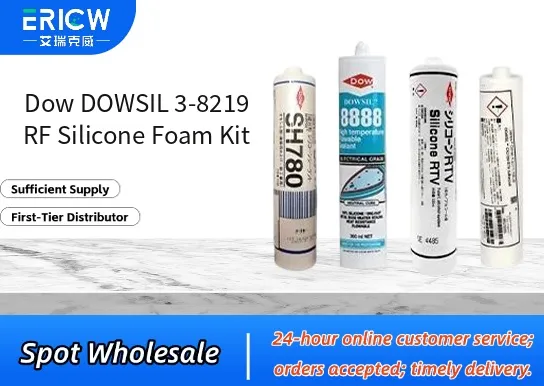
Two-component, room-temperature-curing silicone foam system designed for controlled expansion and low-density cellular structure.
Excellent radio-frequency (RF) transparency with minimal signal attenuation across 500 MHz – 6 GHz range.
Low compression set and high resilience for long-term sealing and cushioning performance in dynamic environments.
Outstanding thermal stability from –60 °C to +200 °C after full cure.
Halogen-free formulation supporting UL 94 HF-1 classification and RoHS compliance.
EMI/RFI shielding gasketing in 5G base station enclosures and mmWave antenna housings.
Thermal interface and vibration-damping padding for radar modules and automotive ADAS sensors.
Sealing and cushioning of aerospace avionics housings requiring RF signal integrity and wide-temperature reliability.
Gap-filling encapsulation for high-frequency test fixtures and wireless communication modules.
Custom-molded foam components for medical RF devices (e.g., MRI-compatible wearable transducers).
| Chemical Type | Platinum-catalyzed addition-cure liquid silicone rubber (LSR) |
| Product Form | Two-part kit: Part A (base) + Part B (catalyst), supplied separately in sealed containers |
| Appearance (Uncured) | Part A: Off-white viscous liquid; Part B: Pale yellow translucent liquid |
| Mix Ratio (by weight) | 10:1 (A:B) |
| Cure Conditions | 25 °C / 72 h (full cure); accelerated cure at 60 °C / 4 h |
| Density (Cured Foam) | 0.25–0.35 g/cm³ |
| Primary Applications | RF-transparent cushioning, EMI gasketing, low-compression-set sealing |
| Regulatory Compliance | RoHS 2015/863/EU compliant; REACH SVHC free; UL 94 HF-1 rated |
| Common Compatible Systems | Suitability |
| Dow DOWSIL™ 3-8219 RF Foam Dispensing Equipment (e.g., Graco Reactor E-FX) | Highly Recommended – Optimized for precise 10:1 metering and low-shear mixing |
| Standard silicone release-coated PET films and fluorosilicone mold surfaces | Highly Recommended – Ensures clean demolding without foam adhesion |
| Aluminum, stainless steel, and anodized aluminum substrates | Recommended – Requires light solvent wipe (isopropyl alcohol) prior to application |
| Polyamide (PA6, PA66) and PBT plastic housings | Suitable – Adhesion enhanced with Dow CORNING® 1-2577 primer |
Q1: What is the CAS Registry Number for Dow DOWSIL 3-8219 RF Silicone Foam Kit?
A: The kit does not have a single CAS number; Part A (base polymer) is assigned CAS 68083-19-2, and Part B (platinum complex catalyst) is assigned CAS 68476-85-7. Full formulation details are available under NDA upon request.
Q2: What is the typical material consumption rate per liter of cured foam volume?
A: Based on 0.30 g/cm³ density and 10:1 mix ratio, approximately 300 g of mixed material yields 1 L of cured foam. Actual yield varies ±5% depending on mixing efficiency and ambient humidity.
Q3: How does DOWSIL 3-8219 differ from DOWSIL 3-8200 in RF applications?
A: DOWSIL 3-8219 is specifically engineered for ultra-low dielectric loss (Df < 0.002 at 2.4 GHz), whereas 3-8200 prioritizes mechanical toughness over RF transparency. 3-8219 also exhibits lower outgassing (< 0.5% TML per ASTM E595) for vacuum-sensitive systems.
Q4: Is DOWSIL 3-8219 compliant with USP Class VI and ISO 10993 for biomedical use?
A: It is not USP Class VI or ISO 10993 certified. While chemically inert and extractables-tested per USP <661.1>, it is intended for external-device RF applications—not direct tissue contact or implantation.
Q5: Are there known extractables or leachables when exposed to aqueous saline at 37 °C for 72 hours?
A: Extraction studies per USP <661.2> show total organic extractables < 15 µg/g in 0.9% NaCl at 37 °C/72 h; no detectable platinum (< 0.1 ppm) or volatile siloxanes (D4–D6) above analytical limits.
Contact With Us:
E-mail: wangxingqiang@ericwchem.com
Have a Questions? Call Us:
Add:
Building A1, Jiete Industrial Park, Huangpu District, Guangzhou City, Guangdong Province, China