English
 Español
 tiếng việt
 русский
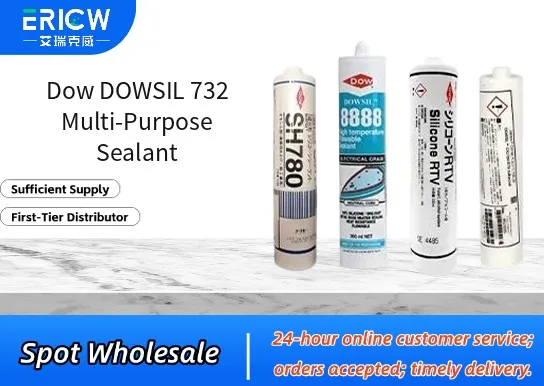
Acetoxy-cure silicone sealant offering rapid skin-over and full cure at room temperature with ambient moisture.
Excellent adhesion to common construction substrates including glass, aluminum, ceramics, and painted metals without primer.
Good resistance to weathering, UV exposure, and thermal cycling from –40 °C to +150 °C.
Low modulus formulation provides high flexibility and movement accommodation (±25% joint movement capability).
Non-corrosive to most metals; acetic acid byproduct dissipates rapidly during cure.
General-purpose glazing and perimeter sealing of windows and curtain walls.
Sealing of interior and exterior architectural joints in commercial and residential buildings.
Weatherproofing of HVAC ductwork, skylights, and roof penetrations.
Assembly bonding and sealing of aluminum composite panels (ACM) and metal cladding systems.
Repair and maintenance sealing for non-structural gaps in kitchens, bathrooms, and balconies.
| Chemical Type | Acetoxy-cure silicone elastomer |
| Product Form | Thixotropic paste, single-component |
| Appearance | Opaque white or clear (depending on variant), smooth uniform consistency |
| Shore A Hardness (7 days, 23 °C/50% RH) | 25–35 |
| Primary Applications | Non-structural architectural sealing and bonding |
| Key Features | Rapid tack-free time (~15–30 min), full cure ~3 mm/day |
| Benefits | No primer required on most substrates; low shrinkage; excellent long-term elasticity |
| Regulatory Compliance | Meets ASTM C920 Type S, Grade NS, Class 25, Use Case M, T, G |
| Common Compatible Systems | Suitability |
| Glass and anodized aluminum framing systems | Highly Recommended – Proven adhesion and compatibility per ASTM C1583 testing |
| Painted steel and powder-coated metal surfaces | Recommended – Adhesion dependent on paint system integrity and surface cleanliness |
| Ceramic tile and porcelain substrates | Suitable – Requires clean, dry, non-dusty surface; not recommended for submerged applications |
| Concrete and masonry (primed) | Recommended – Use with compatible primer (e.g., DOWSIL™ Primer-40) |
Q1: What is the CAS Registry Number for DOWSIL™ 732 Multi-Purpose Sealant?
A: The CAS number applies to the primary polymer component: polydimethylsiloxane (CAS 9006-77-1); the formulated product does not carry a single CAS number as it is a proprietary mixture.
Q2: How much sealant is typically required per linear meter for a standard 10 mm × 10 mm joint?
A: Approximately 100–120 mL per linear meter (based on nominal joint dimensions and 100% gun output efficiency); actual consumption varies with substrate porosity and application technique.
Q3: How does DOWSIL™ 732 differ from neutral-cure silicones like DOWSIL™ 995?
A: DOWSIL™ 732 uses acetoxy cure (releases acetic acid), enabling faster cure and stronger initial adhesion to metals/glass; DOWSIL™ 995 is oxime-cure (neutral), preferred for sensitive substrates like copper, lead, or certain plastics where acid volatility is prohibited.
Q4: Is DOWSIL™ 732 compliant with EU REACH and RoHS regulations?
A: Yes — fully compliant with REACH SVHC candidate list requirements (as of latest update) and RoHS Directive 2011/65/EU; no intentionally added restricted phthalates, mercury, cadmium, or hexavalent chromium.
Q5: Does DOWSIL™ 732 exhibit extractables or leachables in contact with potable water systems?
A: Not approved for direct, continuous contact with potable water; does not meet NSF/ANSI 61 certification. For drinking water applications, use only NSF-certified sealants such as DOWSIL™ 791.
Contact With Us:
E-mail: wangxingqiang@ericwchem.com
Have a Questions? Call Us:
Add:
Building A1, Jiete Industrial Park, Huangpu District, Guangzhou City, Guangdong Province, China