English
 Español
 tiếng việt
 русский
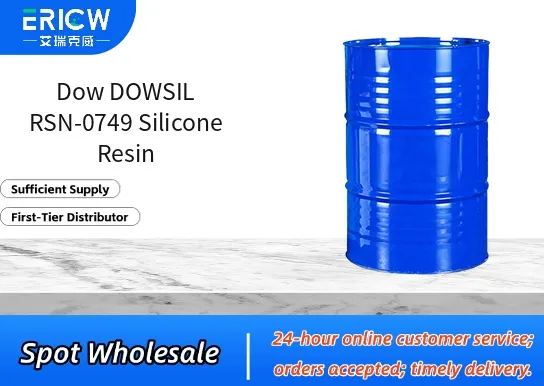
High thermal stability for continuous service up to 250 °C.
Excellent electrical insulation properties with low dielectric loss.
Good compatibility with organic resins and pigments for hybrid formulation systems.
Low volatility and minimal outgassing, suitable for vacuum and aerospace environments.
Hydrophobic surface character providing moisture resistance and improved weatherability.
High-temperature coatings for industrial ovens and exhaust systems.
Electrical encapsulants and potting compounds for power electronics.
Heat-resistant adhesives and sealants in automotive under-hood components.
Reinforcing binder in ceramic fiber insulation blankets.
Base resin in flame-retardant composite matrices for transportation interiors.
| Chemical Type | Phenyl-methyl silicone resin |
| Product Form | Clear to light amber liquid |
| Appearance | Homogeneous, low-viscosity liquid |
| Primary Applications | High-temperature coatings, electrical insulation, heat-resistant binders |
| Key Features | Thermal stability, electrical insulation, hydrophobicity, formulation flexibility |
| Benefits | Extended service life at elevated temperatures, reduced dielectric losses, enhanced moisture resistance |
| Storage Conditions | Store in original sealed container at 15–30 °C; protect from moisture |
| Regulatory Compliance | REACH registered; RoHS compliant |
Q1: What is the primary function of DOWSIL RSN-0749 in coating formulations?
A: DOWSIL RSN-0749 is a methyl-phenyl silicone resin designed to enhance thermal stability, weather resistance, and surface hardness in high-performance organic resin systems—particularly in silicone-modified alkyds, acrylics, and polyesters used for industrial and architectural coatings.
Q2: Is DOWSIL RSN-0749 compatible with common organic solvents and resins?
A: Yes—it exhibits good compatibility with aromatic and aliphatic hydrocarbons, ketones, and esters, and can be readily blended with many thermosetting and thermoplastic organic resins without phase separation, provided proper mixing and stabilization protocols are followed.
Q3: How does DOWSIL RSN-0749 contribute to film formation and cure behavior?
A: It functions as a reactive modifier that participates in crosslinking during thermal cure, improving film integrity and reducing residual stress. Its incorporation typically allows for lower bake temperatures or shorter dwell times while maintaining mechanical and chemical resistance.
Q4: Can DOWSIL RSN-0749 be used in low-VOC or high-solids coating systems?
A: Yes—it is well-suited for high-solids formulations due to its relatively low volatility and high resin solids content, supporting VOC reduction strategies without compromising film performance or application viscosity control.
Contact With Us:
E-mail: wangxingqiang@ericwchem.com
Have a Questions? Call Us:
Add:
Building A1, Jiete Industrial Park, Huangpu District, Guangzhou City, Guangdong Province, China