English
 Español
 tiếng việt
 русский
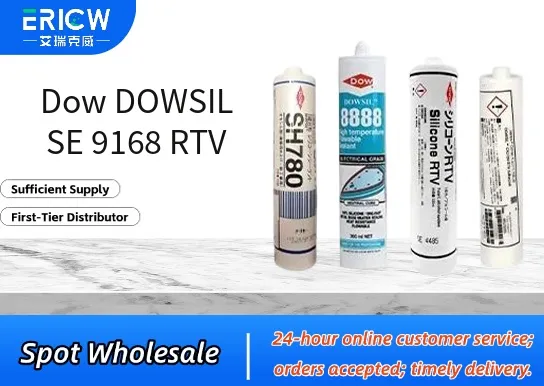
One-component, moisture-curing silicone elastomer with excellent adhesion to low-surface-energy substrates without primer.
Low modulus and high elongation (>300%) for superior stress relief in dynamic or thermally cycled assemblies.
UL 94 HB flammability rating and RoHS-compliant formulation for electronics and appliance applications.
Non-corrosive cure chemistry—releases methanol instead of acetic acid—ensuring compatibility with sensitive metals and electronics.
Stable viscosity at room temperature with extended working life (pot life >60 min at 25°C/50% RH).
Sealing and bonding of LED lighting housings and heat sinks in outdoor-rated luminaires.
Encapsulation and gasketing of power supplies, inverters, and EV onboard chargers.
Thermal interface gap-filling for battery module housings and junction boxes.
Vibration-damping mounts and shock-absorbing pads in industrial control enclosures.
Conformal coating alternative for protecting PCBs in high-humidity, high-voltage environments.
| Chemical Type | Condensation-cure methyl silicone elastomer |
| Product Form | Paste, thixotropic, ready-to-use |
| Appearance | Opaque white to off-white |
| Shore A Hardness (7 days, 23°C/50% RH) | 25–30 |
| Elongation at Break (ASTM D412) | ≥320% |
| Tensile Strength (ASTM D412) | ≥1.8 MPa |
| Primary Applications | Structural bonding, sealing, potting, and vibration damping in electronics & energy systems |
| Regulatory Compliance | RoHS 2015/863/EU, REACH SVHC-free, UL 94 HB, ISO 10993-5 (cytotoxicity tested) |
| Common Compatible Systems | Suitability |
| Aluminum (anodized or bare) | Highly Recommended – Excellent adhesion without primer |
| Polycarbonate (PC) and ABS plastics | Highly Recommended – No stress cracking observed |
| Copper, brass, and stainless steel | Recommended – Strong adhesion; non-corrosive to copper alloys |
| PP and PE (polypropylene/polyethylene) | Suitable – Requires surface activation (e.g., plasma or corona treatment) for reliable bond |
Q1: What is the CAS Registry Number for DOWSIL SE 9168 RTV?
A: The product is a proprietary multi-component formulation; individual CAS numbers are not assigned. Full composition is disclosed in the Safety Data Sheet (SDS) under Section 3 — Ingredients.
Q2: What is the recommended dispensing volume and minimum bond line thickness?
A: Optimal performance is achieved at bond line thicknesses between 0.3 mm and 3.0 mm. Minimum recommended thickness is 0.2 mm; below this, cohesive strength and moisture-cure uniformity may be compromised.
Q3: How does SE 9168 compare to DOWSIL SE 9187 in thermal conductivity and flexibility?
A: SE 9168 is non-filled and electrically insulative (κ ≈ 0.2 W/m·K), prioritizing flexibility and elongation. SE 9187 is aluminum oxide-filled (κ ≈ 1.5 W/m·K) and stiffer (Shore A ~55); it is designed for thermal management, not dynamic sealing.
Q4: Is DOWSIL SE 9168 RTV compliant with FDA 21 CFR 175.300 for indirect food contact?
A: No — it is not formulated or tested for food-contact compliance. It is intended for industrial electronics and energy applications only.
Q5: Has migration or extractables testing been performed per IEC 62778 or IPC-CC-830B?
A: Yes — certified per IPC-CC-830B Class A (non-ionic, low ionic contamination) and passes IEC 62778 photobiological safety screening for LED module use. Full test reports available under NDA.
Contact With Us:
E-mail: wangxingqiang@ericwchem.com
Have a Questions? Call Us:
Add:
Building A1, Jiete Industrial Park, Huangpu District, Guangzhou City, Guangdong Province, China