English
 Español
 tiếng việt
 русский
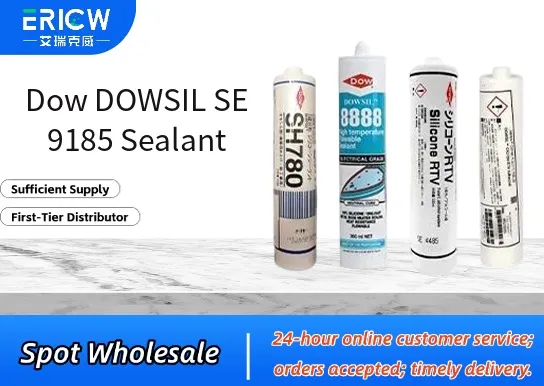
High-performance, one-component, moisture-curing silicone elastomer with excellent adhesion to low-surface-energy substrates including plastics and coated metals.
Low modulus and high elongation (>400%) enabling superior joint movement accommodation and stress relief in dynamic assemblies.
Excellent resistance to thermal cycling, UV exposure, and long-term aging without cracking or embrittlement.
Non-corrosive formulation—safe for use with sensitive electronic components and copper/aluminum substrates.
Meets UL 94 HB flammability rating and supports RoHS-compliant manufacturing requirements.
Sealing and bonding of LED lighting housings and optical lenses in outdoor luminaires.
Encapsulation and edge-sealing of photovoltaic (PV) module frames and junction boxes.
Structural glazing and perimeter sealing in architectural solar control glass units.
Electrical insulation and environmental protection for automotive sensors and power electronics enclosures.
Gap-filling and vibration-damping sealant in HVAC heat exchanger assemblies and fan housings.
| Chemical Type | Acetoxy-cure silicone elastomer |
| Product Form | Paste-like, thixotropic, ready-to-use sealant in cartridge |
| Appearance | Opaque white or translucent off-white paste |
| Cure Mechanism | Moisture-curing at room temperature |
| Primary Applications | Non-structural sealing, bonding, and encapsulation in electronics, solar, and lighting |
| Key Features | Low modulus, high elongation, excellent adhesion to plastics and primed metals |
| Benefits | Reduces assembly stress, eliminates need for surface priming on many substrates, fast tack-free time (~15–30 min) |
| Regulatory Compliance | RoHS 2015/863 compliant; REACH SVHC candidate list free; UL 94 HB rated |
| Common Compatible Systems | Suitability |
| Poly(methyl methacrylate) (PMMA) lenses and diffusers | Highly Recommended – No stress cracking or haze formation observed under accelerated aging |
| Anodized aluminum and powder-coated steel enclosures | Highly Recommended – Strong adhesion without primer; passes ASTM D3359 tape test |
| PVDF- and fluoropolymer-coated architectural panels | Recommended – Adhesion enhanced with light abrading; stable after 1000-h UV exposure |
| PC/ABS blends used in automotive interior modules | Suitable – Requires substrate cleaning with isopropyl alcohol; passes thermal shock (-40°C to +85°C, 500 cycles) |
Q1: What is the CAS Registry Number for DOWSIL SE 9185 Sealant?
A: DOWSIL SE 9185 is a proprietary formulated product; individual CAS numbers are assigned to its major constituents — e.g., dimethylpolysiloxane (CAS 9006-65-9), methyltriacetoxysilane (CAS 2530-87-2). Full composition details are available under NDA upon request.
Q2: What is the recommended bead size and dispensing pressure for optimal cure and adhesion?
A: For most applications, a 2–3 mm bead width and 1.5–2.5 mm bond line thickness are recommended. Dispense at 30–60 psi using standard pneumatic caulk guns; ensure full contact and avoid voids. Tack-free time is typically 15–30 minutes at 23°C/50% RH.
Q3: How does DOWSIL SE 9185 compare to DOWSIL SE 9170 in terms of flexibility and service temperature range?
A: DOWSIL SE 9185 offers higher elongation (>400% vs. ~250% for SE 9170) and lower modulus, making it better suited for high-movement joints. Its continuous service temperature range is -55°C to +150°C, comparable to SE 9170, but with improved low-temperature flexibility below -40°C.
Q4: Are there any known extractables or migration concerns when used in proximity to food-contact or potable water systems?
A: DOWSIL SE 9185 is not certified for NSF/ANSI 51 or 61 and is not intended for direct food-contact or potable water applications. It contains acetoxy byproducts during cure; therefore, it is unsuitable for enclosed, non-ventilated food/water environments. Use only in non-ingestible industrial assemblies.
Contact With Us:
E-mail: wangxingqiang@ericwchem.com
Have a Questions? Call Us:
Add:
Building A1, Jiete Industrial Park, Huangpu District, Guangzhou City, Guangdong Province, China