English
 Español
 tiếng việt
 русский
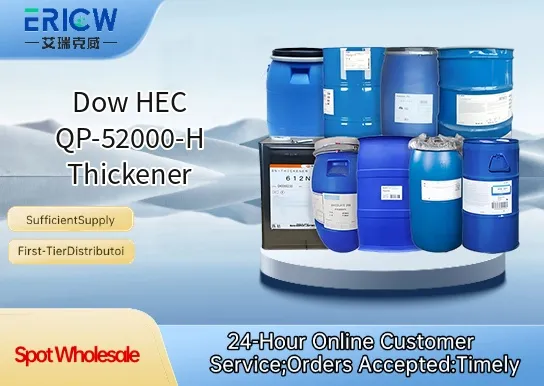
Highly efficient rheology modifier delivering excellent viscosity build and shear-thinning behavior.
Outstanding water retention capability, minimizing sag and improving workability in aqueous systems.
Enhanced compatibility with common surfactants, electrolytes, and biocides used in industrial formulations.
Consistent performance across a broad pH range (3–11), ensuring formulation stability.
Low foam generation and excellent dispersibility for rapid, lump-free hydration.
Architectural coatings including interior and exterior latex paints.
Cement-based tile adhesives and self-leveling underlayments.
Construction grouts and repair mortars requiring improved sag resistance.
Industrial cleaning formulations where controlled viscosity and suspension are critical.
Textile printing pastes requiring stable rheology and pigment suspension.
| Chemical Type | Hydroxyethyl cellulose (HEC) |
| Product Form | Free-flowing white to off-white granular powder |
| Appearance | Free-flowing granules, no visible lumps or discoloration |
| Primary Applications | Water-based architectural coatings, cementitious construction materials, industrial cleaners |
| Key Features | High thickening efficiency, superior water retention, broad pH stability |
| Benefits | Improved application properties, enhanced storage stability, reduced sedimentation |
| Solubility | Readily dispersible in cold water; fully hydrates upon stirring |
| Storage Conditions | Store in cool, dry place below 30°C; protect from moisture and direct sunlight |
Q1: What is the primary functional role of Dow HEC QP-52000-H in formulations?
A: Dow HEC QP-52000-H is a hydroxyethyl cellulose (HEC) polymer designed primarily as a non-ionic rheology modifier and thickener. It provides excellent water-phase viscosity building, good suspension capability, and shear-thinning behavior, making it especially suitable for aqueous systems requiring stable, smooth texture and controlled flow.
Q2: Is Dow HEC QP-52000-H compatible with common preservatives and electrolytes found in industrial and architectural coatings?
A: Yes, this grade exhibits good compatibility with many widely used biocides and mild electrolyte levels typical in architectural paints and industrial maintenance coatings. However, high concentrations of multivalent ions or strongly oxidizing agents may reduce viscosity performance, so compatibility testing under actual formulation conditions is recommended.
Q3: How does Dow HEC QP-52000-H differ from standard HEC grades in terms of dissolution and hydration behavior?
A: QP-52000-H is engineered for rapid, low-foam dispersion and efficient hydration in cold water, minimizing the need for extended mixing or heat-assisted dissolution. Its modified particle morphology supports smoother incorporation and more consistent viscosity development compared to conventional HEC powders, particularly in high-solids or high-pH systems.
Q4: Can Dow HEC QP-52000-H be used in applications requiring freeze-thaw stability?
A: While HEC polymers generally offer moderate freeze-thaw recovery, QP-52000-H is not specifically optimized for repeated freeze-thaw cycling. For formulations subjected to such conditions—especially in exterior architectural coatings—it is advisable to supplement with dedicated freeze-thaw stabilizers and validate performance through real-time or accelerated testing.
Contact With Us:
E-mail: wangxingqiang@ericwchem.com
Have a Questions? Call Us:
Add:
Building A1, Jiete Industrial Park, Huangpu District, Guangzhou City, Guangdong Province, China