English
 Español
 tiếng việt
 русский
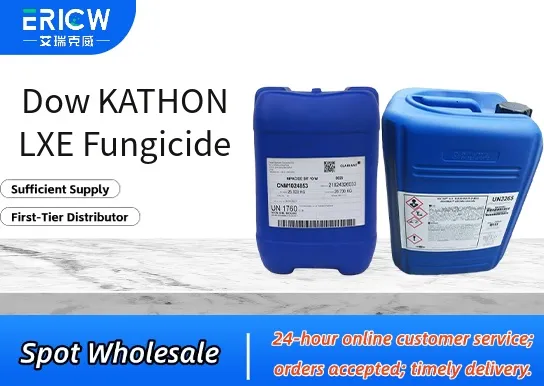
Broad-spectrum biocide effective against bacteria, fungi, and algae.
Low-use concentration enables cost-efficient preservation in water-based systems.
Stable across a wide pH range (pH 4–10) and compatible with common industrial additives.
Non-oxidizing chemistry minimizes corrosion risk to metal components and piping.
Formulated for rapid microbial kill kinetics and sustained residual protection.
Preservation of water-based paints and coatings during storage and application.
Control of microbiological growth in metalworking fluids and coolants.
Protection of adhesives, sealants, and construction chemical formulations.
Maintenance of hygiene in process water systems used in paper manufacturing.
Stabilization of latex emulsions and polymer dispersions in industrial production.
| Chemical Type | Isothiazolinone-based biocide blend (active ingredients: methylchloroisothiazolinone and methylisothiazolinone) |
| Product Form | Aqueous liquid concentrate |
| Appearance | Clear, light amber liquid |
| pH (1% aqueous solution) | 3.0 – 5.0 |
| Density (20°C) | 1.08 – 1.12 g/cm³ |
| Solubility | Completely miscible with water |
| Primary Applications | Paints & coatings, metalworking fluids, adhesives, latex emulsions, paper process water |
| Key Features | Broad-spectrum efficacy, low-dose performance, pH stability, non-oxidizing |
Q1: What is the primary mode of action of Dow KATHON LXE Fungicide?
A: Dow KATHON LXE Fungicide functions as a broad-spectrum biocide through oxidative disruption of essential cellular components in microorganisms, including enzymes and membrane structures. Its active ingredients act synergistically to deliver rapid and sustained control of bacteria, fungi, and algae.
Q2: In which types of industrial systems is Dow KATHON LXE Fungicide commonly applied?
A: It is widely used in water-based industrial formulations and process streams, including metalworking fluids, latex paints and coatings, adhesives, inks, and nonwoven fabric slurries—where microbial growth can compromise product stability, performance, or shelf life.
Q3: How should Dow KATHON LXE Fungicide be incorporated into a formulation?
A: It is typically added during the final stages of formulation, after pH adjustment and cooling, to preserve efficacy. Due to its compatibility with many anionic, nonionic, and amphoteric surfactants—as well as common thickeners and pigments—it integrates smoothly without destabilizing most aqueous systems.
Q4: Is Dow KATHON LXE Fungicide suitable for use in products intended for direct human contact?
A: Dow KATHON LXE Fungicide is designed for industrial preservation—not for consumer-facing personal care or pharmaceutical applications. Formulators must assess end-use requirements, regulatory status, and exposure scenarios in consultation with qualified toxicologists and regulatory experts before deployment.
Q5: What storage conditions are recommended to maintain product stability?
A: Store in original, tightly sealed containers at temperatures between 5 °C and 30 °C, away from direct sunlight and strong oxidizing agents. Prolonged exposure to freezing or excessive heat may affect performance consistency over time.
Contact With Us:
E-mail: wangxingqiang@ericwchem.com
Have a Questions? Call Us:
Add:
Building A1, Jiete Industrial Park, Huangpu District, Guangzhou City, Guangdong Province, China