English
 Español
 tiếng việt
 русский
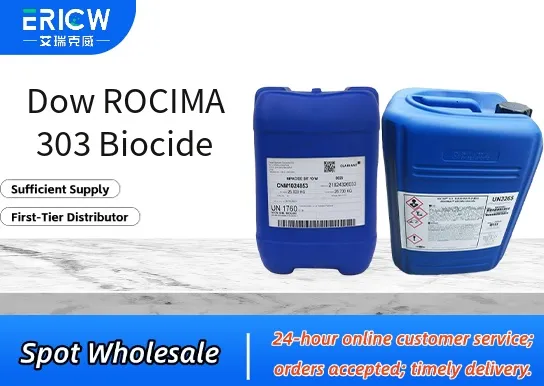
Effective broad-spectrum biocide against bacteria, fungi, and algae in water-based systems.
Low-toxicity formulation designed for compliance with major global regulatory frameworks including EU BPR and US EPA requirements.
Excellent stability in alkaline and moderately hard water conditions, supporting long-term preservation performance.
Compatible with common industrial surfactants, thickeners, and emulsifiers without compromising efficacy or formulation integrity.
Non-oxidizing mode of action helps prevent corrosion and minimizes impact on system metallurgy.
Preservation of water-based metalworking fluids and coolants.
Microbial control in industrial cleaning formulations and detergents.
Protection of latex paints, coatings, and architectural finishes during storage and application.
Stabilization of adhesives, sealants, and construction chemical products.
In-process preservation of process water in papermaking and textile auxiliaries.
| Chemical Type | Isothiazolinone-based biocide (mixture of 5-chloro-2-methyl-4-isothiazolin-3-one and 2-methyl-4-isothiazolin-3-one) |
| Product Form | Aqueous solution |
| Appearance | Clear, pale yellow liquid |
| pH (1% aqueous solution) | 2.5–4.5 |
| Density (20°C) | 1.08–1.12 g/cm³ |
| Solubility | Miscible with water and most polar organic solvents |
| Primary Applications | Preservation of water-based industrial formulations |
| Key Features | Broad-spectrum antimicrobial activity, low volatility, non-oxidizing |
Q1: What is the primary mode of action of Dow ROCIMA 303 Biocide?
A: Dow ROCIMA 303 Biocide functions primarily as a broad-spectrum antimicrobial agent effective against bacteria, yeasts, and molds. Its activity stems from disruption of microbial cell membranes and interference with essential cellular processes, supporting long-term preservation in water-based industrial formulations.
Q2: In which types of industrial formulations is Dow ROCIMA 303 Biocide typically used?
A: It is commonly employed in water-based industrial products such as metalworking fluids, latex paints and coatings, adhesives, construction chemicals, and cleaning concentrates—particularly where extended shelf-life and in-can preservation are required under moderate to challenging microbial conditions.
Q3: Is Dow ROCIMA 303 Biocide compatible with common formulation ingredients?
A: Yes, it demonstrates good compatibility with many anionic, nonionic, and amphoteric surfactants, thickeners, and common co-biocides. Compatibility should always be verified experimentally in the final formulation, especially when high levels of oxidizers, strong acids, or highly alkaline components are present.
Q4: How should Dow ROCIMA 303 Biocide be added during manufacturing?
A: It is recommended to add Dow ROCIMA 303 Biocide late in the manufacturing process, after pH adjustment and cooling, to minimize exposure to extreme temperatures or reactive components. For optimal dispersion, dilute with water or a compatible solvent prior to addition and ensure thorough mixing.
Q5: Does Dow ROCIMA 303 Biocide require special handling or storage conditions?
A: Store in original, tightly sealed containers in a cool, dry, and well-ventilated area away from direct sunlight and strong oxidizing agents. While not classified as highly hazardous, standard industrial hygiene practices—including gloves and eye protection—should be observed during handling to avoid skin or eye contact.
Contact With Us:
E-mail: wangxingqiang@ericwchem.com
Have a Questions? Call Us:
Add:
Building A1, Jiete Industrial Park, Huangpu District, Guangzhou City, Guangdong Province, China