English
 Español
 tiếng việt
 русский
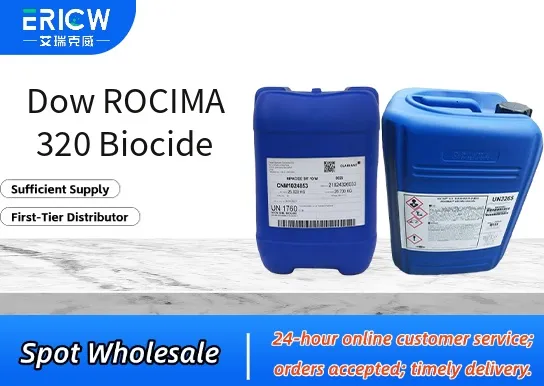
Broad-spectrum efficacy against bacteria, fungi, and algae in industrial water systems.
Stable performance across a wide pH range (pH 4–9) and tolerant to common water treatment additives.
Low foaming formulation suitable for high-shear and recirculating cooling water applications.
Compatible with common corrosion inhibitors and scale inhibitors used in closed-loop and open cooling systems.
Non-oxidizing chemistry minimizes impact on system metallurgy and polymer components.
Industrial cooling water systems (open recirculating and closed-loop).
Process water circuits in paper, pulp, and textile manufacturing.
Make-up water treatment for HVAC chillers and heat exchangers.
Secondary treatment of reclaimed water used in non-potable industrial applications.
Preservation of water-based process fluids and emulsions during storage and transport.
| Chemical Type | Isothiazolinone-based biocide blend |
| Product Form | Clear, amber liquid |
| Appearance | Homogeneous solution, free of sediment or haze |
| Primary Applications | Cooling water, process water, and industrial fluid preservation |
| Key Features | Broad-spectrum, non-oxidizing, low-foaming, pH-stable |
| Recommended Dosage Range | 50–200 ppm active ingredient (system-dependent) |
| Storage Temperature | 5–35 °C (41–95 °F); avoid freezing and prolonged exposure above 40 °C |
| Shelf Life | 24 months from date of manufacture when stored under recommended conditions |
Q1: What is the primary mode of action of Dow ROCIMA 320 Biocide?
A: Dow ROCIMA 320 Biocide is a broad-spectrum, non-oxidizing biocide that functions primarily through membrane disruption and interference with essential cellular processes in bacteria, fungi, and algae.
Q2: In which types of industrial formulations is ROCIMA 320 typically used?
A: It is commonly incorporated into water-based industrial products such as metalworking fluids, latex paints, adhesives, caulks, and construction chemicals—where long-term microbial stability is required during storage and use.
Q3: Is ROCIMA 320 compatible with common surfactants and thickeners used in coatings and construction materials?
A: Yes, ROCIMA 320 demonstrates good compatibility with anionic, nonionic, and amphoteric surfactants, as well as associative and cellulosic thickeners—though compatibility should always be verified under actual formulation conditions.
Q4: How should ROCIMA 320 be added to a formulation for optimal performance?
A: It is recommended to add ROCIMA 320 during the cool-down phase or post-emulsification stage, after pH adjustment and in the presence of adequate mixing, to ensure uniform distribution and minimize degradation or volatilization.
Q5: What is the typical dosage range for ROCIMA 320 in industrial applications?
A: Dosage depends on formulation requirements, challenge level, and regulatory considerations, but it is generally used at low concentrations—typically ranging from 0.1% to 2% by weight of the final product.
Contact With Us:
E-mail: wangxingqiang@ericwchem.com
Have a Questions? Call Us:
Add:
Building A1, Jiete Industrial Park, Huangpu District, Guangzhou City, Guangdong Province, China