English
 Español
 tiếng việt
 русский
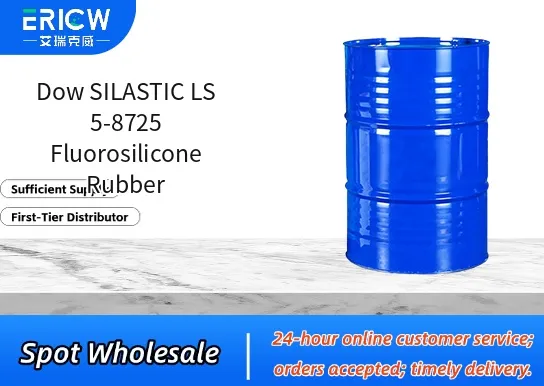
Excellent resistance to fuels, oils, and aggressive hydrocarbon-based fluids across wide temperature ranges.
Outstanding low-temperature flexibility with continuous service capability down to –60 °C (–76 °F).
Enhanced thermal stability for long-term performance at elevated temperatures up to 200 °C (392 °F).
Good compression set resistance, maintaining sealing integrity under prolonged static compression.
Ready-to-process liquid silicone rubber (LSR) formulation with platinum-catalyzed cure system.
Aerospace fuel system seals, gaskets, and diaphragms exposed to jet fuels and hydraulic fluids.
Automotive under-hood components requiring resistance to engine oils and transmission fluids.
Oil & gas downhole instrumentation seals operating in sour gas and high-pressure hydrocarbon environments.
High-reliability industrial sensors and actuators subjected to extreme thermal cycling and chemical exposure.
| Chemical Type | Fluorosilicone Rubber (FVMQ) |
| Product Form | Two-part liquid silicone rubber (Part A + Part B) |
| Appearance | Pale amber, translucent viscous liquids |
| Primary Applications | Static and dynamic seals, gaskets, diaphragms, and molded elastomeric parts |
| Key Features | Fuel/oil resistance, low-temperature flexibility, thermal stability, low compression set |
| Cure System | Platinum-catalyzed addition cure |
| Processing Method | Liquid injection molding (LIM), compression molding, or transfer molding |
| Shelf Life (Unopened, 25 °C) | 12 months from date of manufacture |
Q1: What are the key advantages of Dow SILASTIC LS 5-8725 compared to standard silicone rubbers?
A: Dow SILASTIC LS 5-8725 combines the thermal stability and flexibility of silicone elastomers with enhanced resistance to fuels, oils, chlorinated solvents, and aromatic hydrocarbons—thanks to its fluorosilicone chemistry. This makes it especially suitable for demanding aerospace, automotive, and industrial sealing applications where standard silicones may swell or degrade.
Q2: Is LS 5-8725 suitable for high-temperature dynamic sealing applications?
A: Yes—it retains excellent elastomeric properties over a broad temperature range, typically from –60 °C to +200 °C, and demonstrates good compression set resistance under prolonged elevated-temperature exposure. Its performance in dynamic service depends on part geometry, stress levels, and specific environmental conditions.
Q3: How is LS 5-8725 typically processed?
A: LS 5-8725 is a two-part, platinum-catalyzed liquid silicone rubber (LSR) formulated for injection molding. It offers low viscosity, good flow characteristics, and rapid cure kinetics—enabling efficient production of precision parts. Processing parameters (e.g., mold temperature, injection speed, and cure time) should be optimized based on equipment and part design.
Q4: Does LS 5-8725 require post-curing, and if so, why?
A: Post-curing is generally recommended to maximize thermal stability, optimize mechanical properties, and ensure complete catalyst reaction. While not always mandatory for all applications, it helps improve long-term performance in aggressive chemical environments and at elevated temperatures.
Q5: Can LS 5-8725 be bonded to other substrates, and what surface preparation is advised?
A: Yes—LS 5-8725 can be effectively bonded to metals, glass, and certain engineered plastics using appropriate adhesion promoters. Surface cleaning (e.g., solvent wipe or plasma treatment) is strongly recommended prior to bonding to ensure optimal interfacial strength and long-term durability.
Contact With Us:
E-mail: wangxingqiang@ericwchem.com
Have a Questions? Call Us:
Add:
Building A1, Jiete Industrial Park, Huangpu District, Guangzhou City, Guangdong Province, China