English
 Español
 tiếng việt
 русский
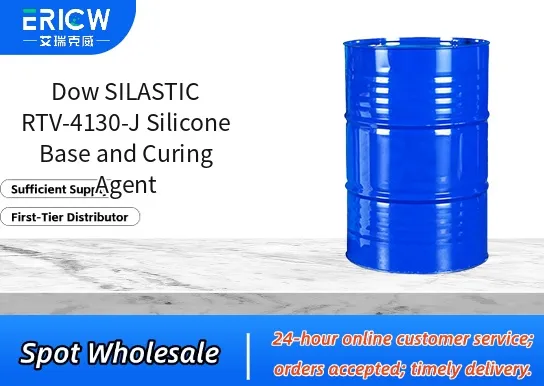
Two-part, addition-cure silicone system offering excellent thermal stability and long-term reliability.
Low viscosity base component enables easy mixing and efficient air release for void-free casting.
Fast room-temperature cure with minimal exotherm, suitable for sensitive electronic assemblies.
UL 94 V-0 rated after full cure, supporting flame-retardant design requirements.
Excellent electrical insulation properties and stable dielectric performance across wide temperature and humidity ranges.
Encapsulation and potting of power electronics, including IGBT modules and DC-DC converters.
Protective coating for automotive sensors exposed to high under-hood temperatures.
Insulation and bonding in renewable energy systems such as solar inverters and battery management units.
Sealing and gasketing in industrial control equipment requiring chemical resistance and dimensional stability.
| Chemical Type | Platinum-catalyzed addition-cure silicone elastomer |
| Product Form | Two-component liquid system (Base + Curing Agent) |
| Appearance | Base: translucent light amber liquid; Curing Agent: colorless to pale yellow liquid |
| Mix Ratio (by weight) | 10 : 1 (Base : Curing Agent) |
| Cure Schedule | 24 hours at 25°C or 2 hours at 80°C |
| Hardness (Shore A) | 40–45 after full cure |
| Density (g/cm³) | Approx. 1.05–1.10 |
| Primary Applications | Electronics encapsulation, thermal management, and environmental protection |
Q1: What is the typical mix ratio of Base to Curing Agent for Dow SILASTIC RTV-4130-J?
A: Dow SILASTIC RTV-4130-J is supplied as a two-component system with a fixed 1:1 by volume mixing ratio. Accurate volumetric metering is recommended to ensure consistent cure performance and optimal physical properties.
Q2: How does humidity affect the cure speed of this silicone system?
A: As a moisture-cure RTV silicone, RTV-4130-J relies on ambient atmospheric moisture to initiate and propagate cure. Higher relative humidity (e.g., >50%) generally accelerates surface tack-free time and through-cure, while low-humidity environments may extend cure duration—especially for thicker sections.
Q3: Can RTV-4130-J be used for encapsulation of sensitive electronic components?
A: Yes—RTV-4130-J is formulated to provide excellent electrical insulation, low-stress curing, and good adhesion to common substrates like plastics, metals, and ceramics, making it suitable for low-voltage electronic encapsulation and potting applications where flexibility and thermal stability are required.
Q4: Is post-cure required to achieve full property development?
A: Post-cure is not mandatory, but elevated temperature conditioning (e.g., 60–80 °C for several hours) can enhance crosslink density, improve compression set resistance, and accelerate full property development—particularly in high-humidity-sensitive or high-reliability applications.
Contact With Us:
E-mail: wangxingqiang@ericwchem.com
Have a Questions? Call Us:
Add:
Building A1, Jiete Industrial Park, Huangpu District, Guangzhou City, Guangdong Province, China