English
 Español
 tiếng việt
 русский
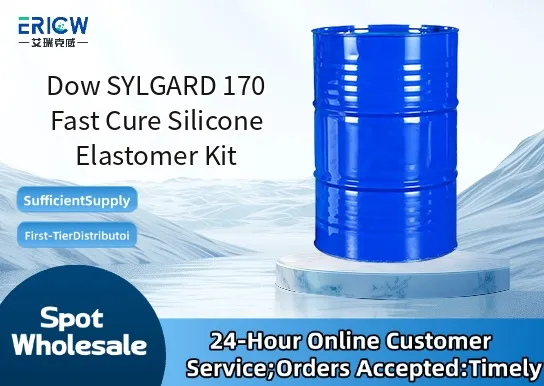
Rapid room-temperature cure (tack-free in ≤30 minutes, full cure in ≤24 hours) without requiring heat or humidity.
Excellent flexibility and elongation (>100%) with low modulus, enabling stress relief in delicate assemblies.
Outstanding thermal stability across –55 °C to +200 °C after full cure.
Superior electrical insulation properties and dielectric strength for high-reliability electronic encapsulation.
Low viscosity before mixing (Part A and Part B), ensuring easy dispensing, degassing, and void-free casting.
Encapsulation and potting of sensitive electronic components including sensors, PCBs, and LED modules.
Prototyping and rapid tooling for soft silicone molds in R&D and low-volume manufacturing.
Conformal coating and protective overmolding of microelectromechanical systems (MEMS) and flexible circuits.
Sealing and gasketing of optical housings and medical device enclosures requiring biocompatibility support.
Dielectric isolation layers in power electronics and high-voltage sensor assemblies.
| Chemical Type | Platinum-catalyzed addition-cure silicone elastomer |
| Product Form | Two-component liquid kit (Part A: base; Part B: catalyst) |
| Appearance (Mixed) | Translucent, low-viscosity liquid |
| Mix Ratio (by weight) | 10:1 (Part A : Part B) |
| Cure Mechanism | Room-temperature addition cure (no by-products) |
| Shore A Hardness (24h, 23°C) | 40–45 |
| Elongation at Break (ASTM D412) | >110% |
| Density (g/cm³, 25°C) | 1.08–1.12 |
Q1: What is the typical mixing ratio of Part A to Part B?
A: Dow SYLGARD 170 is a two-part platinum-catalyzed silicone elastomer system with a 10:1 weight ratio of base (Part A) to catalyst (Part B). Accurate weighing and thorough mixing are essential for consistent cure performance and final elastomer properties.
Q2: How does the fast-cure formulation differ from standard SYLGARD 184?
A: SYLGARD 170 is specifically engineered for accelerated room-temperature and elevated-temperature curing, offering significantly reduced demold times compared to SYLGARD 184. This makes it well-suited for high-throughput prototyping, encapsulation, and mold-making where cycle time is critical — without compromising flexibility, transparency, or thermal stability.
Q3: Can SYLGARD 170 be used for medical device prototyping or biocompatible applications?
A: SYLGARD 170 is not certified for permanent implantation or direct long-term contact with bodily fluids. While it exhibits low cytotoxicity in standard screening assays and is widely used for short-term lab-scale medical device prototyping and testing, formal regulatory compliance (e.g., ISO 10993) requires full evaluation of the final cured part under intended use conditions.
Q4: Does this kit require post-cure to achieve full properties?
A: A post-cure step is not mandatory but is recommended to maximize thermal stability, mechanical consistency, and extractables reduction — especially for applications requiring dimensional stability at elevated temperatures or stringent outgassing performance. Typical post-cure conditions involve heating at 60–100 °C for 1–2 hours, depending on part geometry and end-use requirements.
Q5: Are there known compatibility limitations with common substrates or additives?
A: SYLGARD 170 generally adheres well to glass, silicon, and many metals after proper surface cleaning. However, adhesion to low-surface-energy plastics (e.g., polyethylene, polypropylene) or heavily plasticized PVC may be limited without priming. It is also sensitive to certain sulfur-, amine-, or tin-containing compounds, which can inhibit platinum-catalyzed cure — avoid contact with latex gloves, sulfur-based rubbers, or uncured epoxy resins during handling.
Contact With Us:
E-mail: wangxingqiang@ericwchem.com
Have a Questions? Call Us:
Add:
Building A1, Jiete Industrial Park, Huangpu District, Guangzhou City, Guangdong Province, China